Mental Health Conference Opening
- October 31, 2025
- 12:58 pm
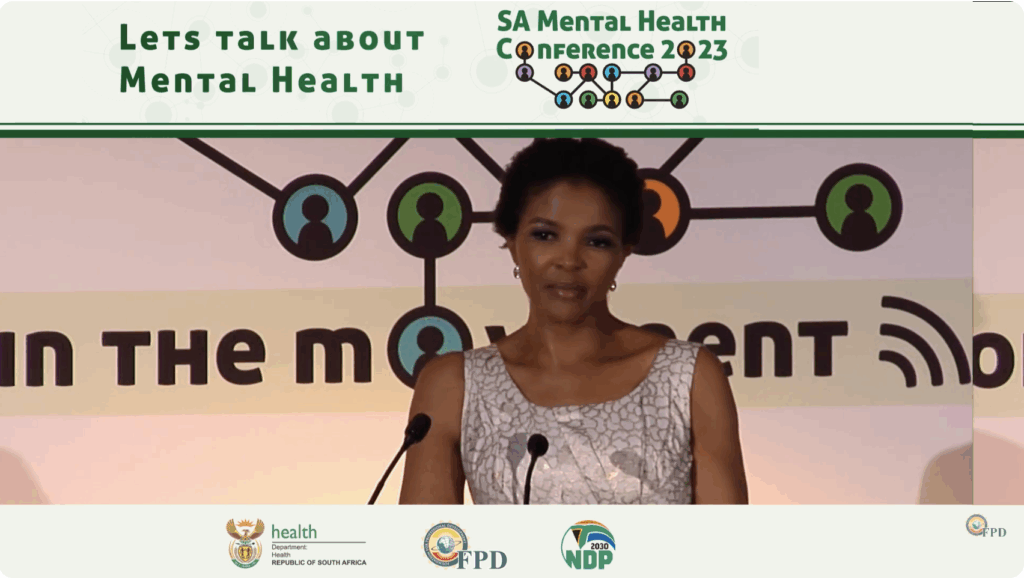
The opening of the Mental Health Conference marks the beginning of an inspiring global gathering dedicated to advancing mental wellness. Distinguished speakers welcome participants and set the tone for collaborative learning. The inaugural address highlights the urgent need for mental health awareness and inclusion. Organizers outline the goals of promoting innovation, research, and compassionate care. A cultural performance and keynote message emphasize hope and resilience. The session concludes with a call to action for collective efforts toward a mentally healthier world.
Summary
This transcript covers a South African mental health conference emphasizing the high prevalence of mental illness, resource shortages, and stigma. Speakers highlight policy gaps, inadequate services, personal experiences with depression, and systemic failures such as the Life Esidimeni tragedy. Recommendations include integrating mental health into primary care, increasing funding, training more professionals, and prioritizing lived experiences in policymaking.
Raw Transcript
[00:00] Thank you.
[00:20] We are going to start with a national anthem with a tradition for our country.
[00:40] In Africa, In the world of the
[01:00] See you there
[01:20] 🎵
[01:40] In the name of the Lord, the Lord is with us.
[02:00] We shall stay.
[02:20] In that style of freedom In the faith of the dead.
[02:40] Thank you.
[03:00] from the different provinces, Director General of the Department of Health, Dr. Sanmiguel Mufilesi, CEO of the Foundation for Professional Development, Dr. Gustav Holfer, Head of Department of Psychiatry and Mental Health.
[03:20] Dr. Dan Stane, Professor Dan Stane, sorry, who is a professor at the University of Kale Town. Professor of the University of Bemorrhizaland, with Tom, representatives of Civil Society.
[03:40] Ladies and gentlemen, all protocols observed are developed nationally. Our opportunity at some point for those that are speaking to say something about it. Allow me to...
[04:00] Allow me to begin by expressing appreciation to the Department of Health as well as the Foundation for Professional Development and organizing the meeting also for convening this very important platform as well as expressing
[04:20] academic freedom and autonomy. It's very important that we have a forum that will give us that opportunity to express ourselves on the basis of information that has been gathered through abstracts. That's what it's about thinking. As chair of the conference, my role
[04:40] is set up the scene and still is best part of the conference.
[05:00] health service provision and I also touch on the challenges and opportunities to ensure access to better health services for all. What we're going to do here is to try to rely on the whole of society approach to address net-and-health distribution.
[05:20] owners and believe that it can improve access to mental health for all members of society, including those who cannot otherwise seek help. We try to work to ensure that the reduce is in associated with mental health, unless if we use a normal situation.
[05:40] We hope that we can have better outcomes for individuals and communities, including improving the quality of life and productivity. We believe that using the home of society approach, we can promote and improve our lives.
[06:00] prevention efforts by identifying the risk factors for mental illness, raising awareness of how the disease, and promoting understanding of the impact of mental illness on individuals and societies. It's very important that we actually bring everyone on board to be able to
[06:20] address the questions of mental health. Good mental health has got great benefits. You're all at the end. That would be for individuals and for sustainable development. Those with mental health really tend to be more productive in their personal and professional lives.
[06:40] They are better able to concentrate on their tasks and are more likely to meet their clients. Having good mental health does reduce the risk of developing chronic diseases and other health conditions, which can lead to a lower health care cost for both individuals and the government.
[07:00] Now, a mentally healthy population can improve economic growth and development because mentally healthy people are more likely to participate in the workforce and contribute to the work that is supposed to be happening to grow the economy.
[07:20] And what we have on this slide is really a summary of the immunity of mental health in our country. You can see that at the global level there are massive problems, more than 300 to 32 million people are suffering from depression.
[07:40] 264 million suffer from anxiety disorder, and the leading cost of disability is mental health, and the fourth leading cost of disease, dead and well-wide, is shown by the mental health organization to be a challenge that we have to deal with.
[08:00] and of course COVID-19 has been a significant situation. In our own country we have got high prevalence of social anxiety disorder, post-traumatic stress disorder, eating disorders, as well as ADHD, and can raise red somewhere between 21% or so.
[08:20] 24.5%. So that's not something small, but it's something really big for the country to have to deal with. And an estimated 17.8% of the population has been found to have probable anxiety. And this is the research that has been carried out recently in South Africa.
[08:40] 17% of South Africans suffer from depression, anxiety, and substance abuse disorders. And you can see that we really as South Africans are not being as well because we are not compared with others in a global, immigrant, lowest in so far as mental health is concerned.
[09:00] Furthermore, the prevalence of any disorder in South Africa is about 1 in 3. So among all of us in the country, expect that every third person we meet might actually have challenges in terms of mental health. Some form of mental health may not be a part of the disease.
[09:20] But it is there. And anxiety disorders are very high, no disorder, substance use. And then we find that the median age of consent is about 77 years for home disorders, 32 years for anxiety disorders, and 21 years for substance abuse.
[09:40] has been carried out by some of our distinguished colleagues who are sitting here, they need to get us. So I wanted to touch base on, it's really on the main recent study that is being done, which was conducted in South Africa amongst the
[10:00] students in our country and they did find that social anxiety is smaller, of course, you must discuss this smaller and so forth is very, very high. I'm going to move on to the next slide which I'll back to talk about what are the factors that contribute to mental health.
[10:20] Okay, there are factors of the continuity of the vector, and these ones have a high rate of poverty in our country, particularly with regard to financial stress. A lot of people are even challenged because of poverty, labor of energy, and so on.
[10:40] having enough resources because they are unemployed, they are inequalities that we're having in our country, there are challenges with their future and their base, and also their rate of political and social people in our country is contributing very much to poor mental health of our country. Their country has called for more
[11:00] a high prevalence of trauma, including exposure to violence and abuse, particularly gender-based violence, which clearly contributes to development and health condition. A large proportion of our people could have a post-traumatic stress disorder which has been found to really result
[11:20] from serious motor vehicle accidents and crime. So when we look at mental health as a challenge, we should not be looking at only those social things that we deal with, but also with the challenges that people have with regard to, ability to, for people to drive in the streets, crime that is related.
[11:40] affecting us. Now I'm going to talk about mental health legislation here, very briefly to say that there are two or three points I want to paint on that. First of all, Saffir has come up with a mental health legislation that is guiding everything that we're doing from 2002, which very important to promote
[12:00] protect the rights of individuals with mental health conditions, also to improve availability and quality of mental health services, and establish a framework that can be used to deliver the services. We need to ensure that services are made available to people.
[12:20] So it is also through the policy that the Department of Health has produced, which aims to expand the availability of mental synthesis. And there is in the policy the need is called for integrating mental health care into a role.
[12:40] primary care settings. Furthermore, it started to require that we promote public awareness and understanding of mental issues and reduce stigma, which is very common in our country. Furthermore, that strategy cause for supporting people to achieve full potential and participate in societies.
[13:00] and then develop community-based services and support systems. So there's strategy calls for that, that we must have community-based services rather than to keep too many people in hospital. There's strategy requests that this member of the system can increase their availability of medical professionals, which are in various ways short supply
[13:20] suicide, and then also it's very important that we address the political economy of mental health so that we go beyond the individual, but focus on the social needs that give rise to mental illness. All the questions of mental health
[13:40] professionals, human resources. We remind very much of the work that is being done globally by the Work and Forgetization as well as the work that is being done in South Africa, which shows that in South Africa, we have only 1.52 psychiatrists to 100,000 population.
[14:00] very well reminded what that means, substance of drug, lack of synthesis for sex. And most of these synthesis are with the private sector. They are based in a very few provinces. Here we talk about how dangerous they change. And therefore it's not a surprise that, you know, a nice division of hospitals
[14:20] non-health psychiatrists or mental health care and mental health care professionals, including medical psychologists. We also have a serious shortage of mental health professionals such as social workers of Asian athletes and a lack of trained mental health nurses. Now the shortage that we have is a very
[14:40] serious one because it's compounded by the fact that they are able to enter the professionals are concentrated in other areas they are not found a lot more important areas or under set areas which means that those areas are likely to receive low quality you know of mental health services we do have a lot of
[15:00] Some of the facilities that are providing mental health care, and I won't go through them, but basically to just say that we do specialized services, hospital services, private health care services, but we also have very little of community-based services, and those community-based services are provided, some of them by NGOs,
[15:20] organizations and support groups and so forth. But there's also a need to ensure that we have good institutional support, particularly at the wage setting, which becomes very critical as well as in the religious sectors. There are challenges that we need to deal with.
[15:40] But before I come to that, I'm taking the question of financial resources. We have challenges in terms of financial resources in our country. We are not able to provide the services that we need to have simply because we do not have financial resources. There is an investment case that has been developed by the department.
[16:00] Department of Health, when commissioned by the Department of Health, and scientists that really, really went hard to make sure that they come up with an investment case for, return on investment case, you know, for mental health. If you look at it, you will see that, you know, the spending in 2016 to 2017 is about 7.8 billion.
[16:20] that is allocated for mental health, which is about 4.6% of the total health budget. Secondly, the capital expenditure is pretty low, 168%, and that in itself is not adequate. That investment case that was done by the
[16:40] and its recenters that are shown here, that show that we really are not having enough resources to do that. In fact, the 7.8 billion that we are seeing there is not very different from what we have for this kind of financial budget decision, which is about 6.5 billion, you know, random data such as this, and all.
[17:00] mental health. So that has become a challenge for us that we need to deal with because we cannot support infrastructure that we need to have because of the effect that we don't have resources, we've got stigma that is really major that we need to deal with, including the question of discrimination.
[17:20] Mental health services also are not very well integrated into primary health care. That is something we need to work on as hard as we can to make sure that we can get our family members, our friends, our colleagues who have mental disorders to really be integrated with the family. Treat people with mental and mental disorder.
[17:40] same way as we treat some of the diabetes with hypertension and so forth, that's how we need to do so. And the limited range of treatment options that are available in our country are a challenge. We need to improve. We need to change very much the issue of the level of access to hospital services for mental health.
[18:00] particularly those that live in the rural areas or in the other safe areas. And the quality of health care in our country, with so-called mental and dysconserenics, is very, very good. We need to contain something about that. But we cannot just look at the fact that there are challenges. We have to think about the issue of
[18:20] opportunities. What are the opportunities? Well, there are opportunities. We can increase access to parity mental health services for all and we could do that regardless of the location of where they are, regardless of their social and programming status. By increasing the number of mental health professionals, we need to train more mental health workers and increase their access to health care.
[18:40] is in funding for mental health services. We must keep that mental health problems before they okay and provide any intervention for those experiencing mental health challenges. Let's not wait for things to deteriorate before we can stand up and do something about it. Again, let's deal with stigma.
[19:00] We need to have public education, companions of children around the country, and we must ensure that there are efforts to change the negative attitudes and beliefs about mental illness. We must coordinate our care across different sectors and levels of care.
[19:20] as primary health care specialists in a community-based care, so that the cannot be seen as so that the patient knows exactly where they're supposed to get in care when they need to do it. But most importantly, we must actually evaluate over and over the effectiveness of our mental health services and the policies and environment.
[19:40] civil society to participate in that process of evaluating over there. I think if we did that, we certainly are going to improve the way in which we over the services. I just want to conclude by saying that we have delved a little bit into various aspects of mental health services.
[20:00] in our country, including the image of mental health, the availability of services in alien policies, human resources, finance and the infrastructure for service provision. While there are down-to-tea challenges to ensuring access to mental health services for all, I do believe that there are also opportunities for
[20:20] for purpose to improve the situation. And by continuing to prioritize mental health as a critical aspect of their overall campaign, we can to then un-mix our public health services accessible and equitable to all South Africans.
[20:40] very much. APPLAUSE Now what I'm going to do here is to introduce Zimpu et Dana and Zimpu, I just want to say something about yourself before you come to the stage for care training piece.
[21:00] Similarly, has the skill and ability to master the creation and garlic evolution of the music. This is what separates him as a great artist, even from other artists.
[21:20] numerous awards and not only domestic but also international and she saw a music topic global chats where it is an internationalist she if you think about her 10th up on culture law it claimed
[21:40] number one spot on the German wind music charts and number three in the European music charts. So she's really a great artist. In key forms, the viewers strive to stimulate conversation that speaks to awareness and change of social economic challenges.
[22:00] in communities across South Africa and Africa and the rest of the world. Since people in the year 2016 saw herself make history as she was named African Movement of the Year by the new African Movement alongside the likes of Esta Matrando, the late Esta Matrando Castor,
[22:20] My name is Neha Azim, I'm a people's network. She is really, really a great person who is really going to give us some really, really good music here. Sephora, can you just please come up this case for me?
[22:40] Thank you.
[23:00] And I'm here because I have, I live with depression, rather. And most of my work is premised on trying to overcome or to heal.
[23:20] And it's so hard to decide what I do for myself. It works for all of you. Tram, I wanted to say today, or I wanted to talk, that I actually do like to sing one song.
[23:40] song that explains my entire existence and how I get myself out of bed in the morning.
[24:00] God, God, God, he went on. Well, I'm well-wasted. Well, I'm well-wasted. O, y'all, I'm well-wasted.
[24:20] Un gak, Un alghi.
[24:40] triggered me because writing it I had to remember maybe just really free. There's a word in my language, in bande, what you feel alone. This is how as an African a place to crack.
[25:00] college
[25:20] grateful for the little we have provided. Particularly in those homes where parents would try really hard to create a happy home out of the little bit of gain from oppression and the co-operating society that's the name there. Being moody was considered an important part of the problem.
[25:40] weightful and rude. So we learned to swallow these feelings and with us loaded with that, a ticking tiny ball. My mother, God bless her heart and made us always in peace. Broke her back, carried her children. Therefore,
[26:00] Having been conditioned by society, I chose to not bother her and chose to make way for child until my brother passed away when I was 12 and the taking time bomb exploded. The feelings of guilt when I came to in hospital watching this God-wearing
[26:20] hearing, grooving an exhausted woman holding my hand quietly praying and crying, intensified my guilt. I swore I would keep my feelings in check and not be weak. I kept my promise until our
[26:40] I was a little older child and I put hold to my own against the world. For a long time I believed what does not kill you makes you stronger. I swore, excuse me, sorry, I used my language, I believed I was strong for having survived so much.
[27:00] But depression was in its own way with every person's movement until it was no longer in denial. Depression does not care about emergency spaces. I was not strong on this denial and anything could have pushed me over the edge at any moment and many times it did.
[27:20] I did, but I survived. And I equationed as survival to be very strong. But what if I had not survived? Question. I have opened down way too many times to count. Many times my life was clean by a spread.
[27:40] There is a point of depression where you just want the pain to stop by any means necessary, where nothing else in life has to be, because the pain is blinding. Surviving that kind of pain does not mean you're strong, it means you are simply lacking its grace.
[28:00] that right now. Keeping with depression like myself would be everything to avoid sticking out. The concerning number of us tends to gravitate towards spirituality or substance abuse. Spiritualist abuse and the sense of being above everything.
[28:20] Substance abuse gives us retreat from our senses until that chilling time bomb explodes. I was one of the spiritual ones until a turning point in my late thirties. Though I would not have a drink, I would work with my parents.
[28:40] on a bender with no high trigger. At the tweltering point I also resisted by catalyst, I accepted that I had a problem and finally enough that drove me into a deep question. I heavily isolated myself.
[29:00] The organization completely broke me and a lot of my traumas came to perform, particularly in my childhood traumas. I began many times. The complete focus of this toy present, I have
[29:20] It is all my life. I fell apart with a strange but oddly affirming feeling in an end to my condition. There are few things in it. I will probably sit down two years later.
[29:40] But the presence of stoicism had left my body, I accepted my vulnerabilities and explored them, and only then was I ready to sit down. Currently, our romance has been 10 months from now, and our visit will be started in long 23.
[30:00] My depression is not so traditional. It is not triggered by anything. It just happens. By certain conditions may have abatpated, but they don't cause it. Still, I could have everything going for me and only be interested in full myself to be there.
[30:20] I could have an award where I could go and accept an award, but the mind says no. It is something that was in my family, which really made me feel genetic. I don't know. I'm not as ecologist.
[30:40] I'm not a scientist. So tell me, how does a young African child explain to their hardworking parents that they feel sad or not profitable? Is it? I'm raising children who are suspecting me.
[31:00] I'm happy to say that the corinne hut in the most better environment than I did with their feelings, their still of mind is much more understood. I had a lot of love for my mother corinne hut. This was never understood and I had to keep it at home.
[31:20] check, I'm not sure we'll even have to do that. We deal with it, you know, with the old meds, they seek the rapist because I understand that this thing is not something you can control. So giving the same means a lot of ways. The same will be because it is an outlet.
[31:40] Of loading is dirty. But the celebrity that it comes with makes it such that it sometimes gets lost that I was frightened to dream at the time I wrote those songs. Lower Masi Kamu Ke, they told me about how the summer for Ke because they heard the song.
[32:00] my song, which is made on the healer, I understand. I have found ways to heal this healer. Men's, a psychologist, is a modality of African space-related.
[32:20] Thank you.
[32:40] naturally cope with it. And there is in fact a number of questions for all of us about depression in terms of how it manifests itself and how coping with it can also be a challenge. But in your case, you did not stop, you did not stop you for
[33:00] excel, you still continue to do this great work. Let's give them another round of applause. I'm going to change the program and because our Minister of Health is here, are you ready, Minister?
[33:20] Can I introduce you or do you think I should continue in the upper part of the program? Thank you very much. So what I'm going to do is to introduce Shamin Simkel. She's the founder of the Global Network of Health Peer Network.
[33:40] work. And Shaan is an internationally-caired, she works as an internationally-caired organization which focuses on empowerment and developing deep experience leadership. She's a person with deep experience.
[34:00] and global voice for the rise of people with deep experience on the impact of health conditions. She offered and co-authored several papers, you know, from the health experience perspective for leading international publications. She was a commissioner on the last commission on
[34:20] mental health and sustainable development. And also on the mindset commission for the future of psychiatry, she co-chaired the 2022 mindset commission, which is a global organization, on ending stigma and discrimination in mental health.
[34:40] She serves on several international boards and committees and previously has been on the South African Presidential Week in Groupon Disability and Ministerial Advisor, Committee on Mental Health. And she received a few national and international awards. She's going to be speaking to us on what
[35:00] What does policy mean in reality? Shall we put the floor?
[35:20] Thank you. Good morning everyone. So thank you for obviously showing up and introducing me and it's really a wonderful opportunity to be here today. So I'm going to talk to you about whether policy will be in the end. I have some thoughts on sort of what is going on here today. I'm going to talk to you about whether policy will be in the end. I have some thoughts on sort of what is going on here today. I'm going to talk to you about whether policy will be in the end. I have some thoughts on sort of what is going on here today. I'm going to talk to you about whether policy will be in the end. I have some thoughts on sort of what is going on here today. I have some thoughts on sort of what is going on here today. I have some thoughts on sort of what is going on here today. I have some thoughts on sort of what is going on here today. I have some thoughts on sort of what is going on here today. I have some thoughts on sort of what is going on here today. I have some thoughts on sort of what is going on here today. I have some thoughts on sort of what is going on here today. I have some thoughts on sort of what is going on here today. I have some thoughts on sort of what is going on here today. I have some thoughts on sort of what is going on here today. I have some thoughts on sort of what is going on here today. I have some thoughts on sort of what is going on here today. I have some thoughts on sort of what is going on here today.
[35:40] what I like to say, I thought, you know, not to go into what is so much wrong with the system in sense of policy, but rather to kind of guide you, speak to a direction of what you need to do to improve it. So I think when we look at policy, we need to ask ourselves,
[36:00] two basic questions. Does policy respond to the needs of people with the experience of sub-agency leaders? And does policy protect human rights? So that is the key function of what policy should be.
[36:20] We heard a lot from Sicham about the challenges and opportunities. And I think what's missing, especially in terms of South Africa, the severity could be enhanced. It is critical that we include the perspectives and recommendations of service users in the development and the view of policies.
[36:40] If we do not do that, it ends up a waste of ex-wemitre because then we do not have services or systems that actually align with the needs of service users in order to thrive. So without the element of good practice,
[37:00] practices in policy, it merely becomes words and pieces of code. So let's look at what the good practices are in terms of policy. Inclusion, which is very important. Mental health in there from very aspects of your life.
[37:20] on health or your mental health, impacts on work-life, education, on family life, everything. Therefore it's important that all relevant stakeholders are included and engaged with when it comes to policy. And most importantly is that people with left experience should be a key partner in this process.
[37:40] Diversity and equality is also important. When we look at Bangkok Health, we need to include diverse voices, the other people in terms of Bangkok Health, LGBTQ communities, common people, all the people with Bangkok Health are impacted. And then we come to resource allocation.
[38:00] We now need a very small budget in mental health, as Shana indicated. But it's important for policy to be effective to allocate sufficient budget for the implementation of policy. There also need to be a budget for proper monitoring and evaluation.
[38:20] of course, as human resources to be indicated to manage this. In fact, in accountability. Very important is that people with lived experience or service users themselves need to be involved in the monitoring and evaluation of policy and services.
[38:40] And when we measure implants, if that is not about how many people access services, how many people access medication? We need to look at quality of life, how much is going on, indicated there. But what is your life? I just want to emphasize, how many people actually got jobs, how many people went to present education,
[39:00] had people actually further develop themselves as individuals. And then reporting and responding. Policymakers or governments need to report on the progress of policy implementers in anti-sectrophesin. And then respond what went wrong and how are we going to fix it together.
[39:20] So if we do the, uh, follow the good practices in policy, what will happen is human rights will be respected and protected. We will see that services and support will be of high quality. We will also see trust and confidence in the system and that of course will include engagement with people.
[39:40] And then again, if you really look at it and think about it, it's a cost-affict of the way to go through it, because then you're going to save on implementing services that are not really benefiting service users. So how do we include people with that experience, also?
[40:00] uses meaningfully anything to do in policy. At the global make-a-lapse BNA with we the planet specifically for policymakers and governments consult guidance. So here is just some highlights of that.
[40:20] create a safe and engaging space that's also supportive to enable quality contributions from people with left experience. Also to obtain, as I mentioned, a more diverse representation of the social experience to enhance the equality and inclusion.
[40:40] Then we need to say no to power imbalances, no to paternalism, no to jokonism, and no discrimination or stigmatization. We also need to suspend a mutually respected partnership between people with lived experience and all stakeholders involved.
[41:00] and to uphold the principles of effective engagement and consultation. We need to leverage self-experience expertise through meaningful and unfamening engagement and policy. And finally, to transform policy and practice that is an accurate reflection of self-experience.
[41:20] experience voices. And by that, when we give providing puts into policy and people with health experience, we need to see that our recommendations and perspectives are actually included into that.
[41:40] I was advised to say in the exhibition hall, so please listen to real stories about real people and if you personally have experience in negotiating story here. And I thank you very much.
[42:00] Thank you very, very much for sharing with us that experience in terms of how we can have a good policy and practice, otherwise making sure that whatever it is,
[42:20] We do the focus on the human rights, we focus on the party to our services, we ensure that there is trust and confidence in the services that are to be provided, and also the importance of consultation. So now I need to cover something, which is a third area about...
[42:40] Esther
[43:00] who is going to speak to us on life recidivism because she is a member of that committee that went on life recidivism. And she is a bereaved family member, a mental health activist, a member of life recidivism.
[43:20] family comitinist and she's been one of those members who's been fighting for people who died as a result of closure of acid denatement. His sister was one who lost her life in the tragedy.
[43:40] and the sister's daughter died on the first day of arbitration with the hope seen by former Deputy Chief Justice Mr. Necker. Obviously the case of life-res
[44:00] in the post about self-advocacy. And the DNA brought us to all look at the issue of medical crisis in our energy. I'm going to ask her to come and speak to us and share some of the experiences that we have.
[44:20] So just in coming peace. Thank you so much. Thanks. ["The Star-Spangled Banner"]
[44:40] Thank you.
[45:00] I tend to go over this. I'm sorry, I'm not going to be as necessary. I'm angry. I am angry. I'm angry because I am looking for the...
[45:20] native hospitalist. Now I'm not going to express my anger to you, who also I express to you. Minister, you are at the top of the chain, sir. My topic here is health and emergency.
[45:40] anything that's found. No, nothing is changed. The stats the 12th days are true but they have changed
[46:00] somewhat. There is one psychiatrist for every 300,000 sauerkraves. 300,000, not 100, 300. The main
[46:20] Mental health fraternity is not helping us. Do you know that when we approach you as individuals of a certain level, we are frowned upon because I didn't go to school. Where do I go? And I'll tell you what I do.
[46:40] My sister, which got sick, we had to go to different facilities to get attention. We played true after several years of trying to feed our group as well.
[47:00] at the time. But the problem is, and this is with the policy principle, the problem is that as an individual at home, you realize there's something wrong with the child. At culinary level, you've got no where to go. You're waiting to help you. And that's where the
[47:20] The policies speak to all of us. You see, the policy that has recently collapsed in 2020 was beautiful. It happened never in the United States. Why have we really invented the policy when it's late? Why have we not been mutilated?
[47:40] May you have a quick interview? I have an appointment. Do you know how many people suffer on a day to day basis? Now what has happened? Because of this tragedy, my two oldest kids had not suffered on a day basis. I suffer for anxiety.
[48:00] Understand that by not dealing with the situation, you are not helping anybody. Where the system affect my system and such equal to my family members and myself is that we're not going to a goal of failure. Nobody understands.
[48:20] They sent me to the next room, and she was Idan Bell. I gave to Idan Bell. The doctor did not even bother to get a diagnosis. The psychiatrist, and by the way, it was not a Southern pre-psychiatrist.
[48:40] She looked down and she scroogled, where there was a scroogle, and prescribed the zenin. I get an accomplice that I am hacking this block temperature. It's something we need to have. Now if the system's ability has such a face in it, what is it doing to a corporate union?
[49:00] doesn't even have the access to go to the nearest clinic. So the policy has not been through that it has changed. Majority of the mental health facilities that we speak about, the specialized ones, are found in the facilities.
[49:20] doing anything to help them with their mental health. Please, my time is up. There's a lot to say. But what I'm trying to say to you is people that in group are suffering, they are knowledgeable, nothing has changed. So please, if you're going to be sitting in these conferences.
[49:40] Can something come from this conference? Reality? They need reality. Because some of you might end up in this dangerous facility yourselves. What do you mean? You're talking in here. So approach this thing in a way that actually means something is going to be there.
[50:00] change it out. If you ever see some of the stories and how horrific they were with landkeeping, there's an exhibition outside. Go and read some of the stories and see what happened. Always spend time and actually read what happened. I'm a victim. I'm open to the health engine problem that I'm taking.
[50:20] economic development. Because I'm an activist, working in the government, you don't want to know how I can adapt. So when you stand up in this country, in spite of the right thing, you are being too loose. How are we going to change that?
[50:40] We brought an embassy right here. I have a firm recommendation we haven't met with the ladies. And I don't need to put an industry group, not a directing an industry spirit. But it just shows there's a disconnect in the manner in what you guys do and what happens outside of it.
[51:00] got to change there's a protocol and problem that you get at it I agree with that you guys come up with all these processes they need to happen
[51:20] We've got less than 5% than the other national budget to do things. What about to work with the lower level of basis? Why isn't it? Pay private facilities? Policy has got nothing for been in a half.
[51:40] The policy has not changed, it hasn't improved. We've actually come up with a saying that says a mental health happened on a daily basis in September, the mental health drank. The electricity bin happened on a daily basis. Because you have to, does he have conferences?
[52:00] We are too busy forming protocol. We are not living the lives of the people suffering from mental health. Mental health is as important as risk health. Why did not give the same attention?
[52:20] Thank you.
[52:40] activists. You came here because you called you to form, to be part of a movement to deal with mental health. So it's a societal approach that we are taking. That's why we have people with lived experience to come here.
[53:00] to remind all of us of the importance of mental health in South Africa. And I'm hoping that out of this conference the movement would be stronger, it would have led a lot from what those that are living with a condition.
[53:20] all his families have experienced this have shared with us. The next speaker is going to be our honorable minister, Dr. Joe Pacha. He was appointed as Minister of Health on the 5th of August 2021.
[53:40] He holds a Bachelor of Medicine and a Bachelor of 7 from the University of Natal, Diploma in Health and Status Management, and the University from the University of Haifa, Institute of Science, Israel, in 1992.
[54:00] Then here, this is about the first president responsible for coordinating the office of a president. He's a good colleague and is going to be listening, is asked to listen to this limitation that it can be fought.
[54:20] because he believes he has to hear what people are saying in order to guide what he does. Take it away.
[54:40] These introductions can sound like an obituary. I don't want to listen to my own obituary. Thank you very much, Mr. President.
[55:00] I am the first to my colleagues, Deputy Minister Dr. Loma, M.D. for Health, also M.D. for Health and one less from
[55:20] but also for awareness. Of course I do it for testing, because the other police argue that even though it's not related in black and white, they are also for awareness. But the only one who has a strong discussion is grateful for awareness.
[55:40] And let me say, to the director and all guests, that I'm quite at least that a quite a number of my colleagues are here. The Sifuhouti, the Bopu, Bumalanga, Northwest, Western Cape and the Eastern Cape.
[56:00] So it's really quite rare that when we have conferences that we have such a contingency. So I would say to the speakers just now that you actually speak into the writing because
[56:20] the amnestics are here in the amatronics. And also thanks also to St. Buret for a very inspiring message. Also our DG is here, various head of departments, I've seen them also here, and also colleagues from other.
[56:40] department, the CEO of the Foundation for Professional Development,
[57:00] and the colleagues from the committee. Good morning, ladies and gentlemen, I'm gonna remember Abhisheh. Let me thank the organizers of this conference, the Foundation.
[57:20] for professional development and also from the National Department of Health for organizing this conference, to which I consider quite timely. I must say I also did say to the team as we discussed in this conversation,
[57:40] I'm not going to say, not going to say director, and I'm happy that your assessing that indeed is going to speak to that. It's fine to, I see there are quite a number of scientific reports and presentations, but I need to be also convinced and satisfied that we'll also
[58:00] speaking to the lived reality of ordinary South Africans. We know that our mental health services still have a long reach for and I'm hoping and I'm happy that you're also confirming that that's what's going to happen.
[58:20] Recently launched World Health Organisation's World Mental Health Report titled Transforming Mental Health for All estimates that on average, 13% of the world's population live with a mental disorder, and that the prevalence
[58:40] In the African continent it is about 11%. The same report goes on to say that mental disorders are the leading cause of years lived with disability. Accounting for one in every six years lived with disability globally.
[59:00] that economic consequences of mental health conditions are quite enormous. Mental health disorders are associated with significant distress and impairment of human functioning, including in learning in the workplace and in family relations.
[59:20] It was with this in mind that the World Health Organization made a very popular and well-known definition of health, as most of us will remember. That is, health is a state of complete physical, mental and social valedict.
[59:40] and not nearly an absence of disease or infamity. In essence, this definition implies to us that mental, physical and social aspects of health are intertwined and that none can be achieved without the other.
[01:00:00] The value of mental illness is felt not only through the primary presentation of mental disorders, but also through its high comobility with other illnesses. Mental illness has been felt to be both a times a precursor of mental illness and a time to be able to be able to be able to be able to be able to be able to be able to be able to be able to be able to be able to be able to be able to be able to be able to be able to be able to be able to be able to be able to be able to be able to be able to be able to be able to be able to be able to be able to be able to be able to be able to be able to be able to be able to be able to be able to be able to be able to be able to be able to be able to be able to be able to be able to be able to be able to be able to be able to be able to be able to be able to be able to be able to be able to be able to be able to be able to be able to be able to be able to be able to be able to be able to be able to be able to be able to be able to be able to be able to be able to be able to be able to be able to be able to be able to be able to be able to be able to be able to be able to be able to be able to be able to be able to be able to be able to be able to be able to be able to be able to be able to be able to be able to be able to be able to be able to be able to be able to be able to be able to be able to be able to be able to be able to be able to be able to be able to be able to be able to be able to be able to be able to be able to be able to be able to be able to be able to be able to be able to be able to be able to be able to be able to be able to be able to be able to be able to be able to be able to be able to be able to be able to
[01:00:20] and also a consequence of medical disease. I think in the most recent, with the COVID-19 pandemic, we know the coexistence of physical ill health and its effect also on the individual.
[01:00:40] mental health and also on the mental well-being of people in your surroundings. Safe can be said about HIV and also some of the other illnesses including non-communicated practices. Poorly managed mental health is always negatively affecting treatment outcomes of both.
[01:01:00] the mental illness itself and also the occurring capabilities. While the occurrence of mental disorders results from a complex interaction between biological, psychological and social determinants, the inadhibitable and adverse socioeconomic environment
[01:01:20] in our country provide federal clearance for predisposition to mental health as a causation and also as an exacerbation of mental illness. The COVID-19 pandemic and other disasters like we've gone through,
[01:01:40] have further illuminated the importance of mental health. We saw how COVID-19 brought about mental and physical damage amongst the people, also quite emotional damage about the people.
[01:02:00] It looks like there is no scientific indication currently of significant increase in people seeking mental services post-COVID. We know that anecdotally.
[01:02:20] our observations in society, in general, are made a little bit deeper in terms of this. The fact that they're not actual figures from our health facilities, which show clearly the uptick in people seeking mental health services.
[01:02:40] after the high rise of the COVID, but it clearly did have a major impact, not only physically, but also in Worcester, amongst families and South Africa, just like. And it is not surprising, therefore, that SADAC does indicate an increase.
[01:03:00] in people who are utilizing their facilities as a result of seeking assistance for suicidal feelings.
[01:03:20] services, but there are also other aspects which show that indeed the pandemic did have a major effect in terms of mental oneness. The individual's potential to date and fulfilling white family, academic and from a family
[01:03:40] perspective I think as a few minutes or any given as a lived experience in this aspect also from academic or social life can be negatively interrupted by episodes of mental illness and this has implications well beyond the individual
[01:04:00] There are no adequate services to deal with this situation. It's only bound to zero. Hence, we are striving to understand that as Kristina indicated, we're still not there. We are striving to make sure that they can be increased in both answers.
[01:04:20] and quality of mental health services. Researchers list the barriers to progress in mental health services development, some of which being our prevailing public health and biology approaches, and its effect on funding.
[01:04:40] Chair spoke about it earlier on the complexity of and resistance to decentralization of mental health services, the challenge to implementation of mental health and the primary health level, again it's already been said in practice that there are still very short and primary health settings.
[01:05:00] The lower numbers and types of health workers who are changed and supervised in mental health care are already in the indication of the obedience of psychiatrists, especially in the public health system. And the frequency of public health perspective is not clear.
[01:05:20] in mental health division. Researchers also state that many of the barriers to progress in improvement of mental health services can be assisted among others, to my colleagues, by the political community, and also the organization of accessible individuals.
[01:05:40] human resources for mental health. Since the beginning of our democracy in 1994, government has set out to try and address this crisis. This commitment is demonstrated through the principles adopted for mental health and substance abuse.
[01:06:00] in the white paper for the transformation of health systems in South Africa, 1997, and it's subsequently through the Mental Health Act at number 17 of 2002, and later on through the national mental health policy framework and strategic plan of 20.
[01:06:20] 2020. But of course we have fallen.