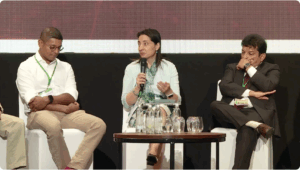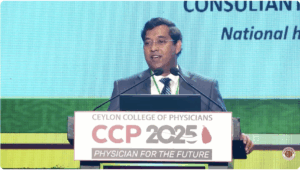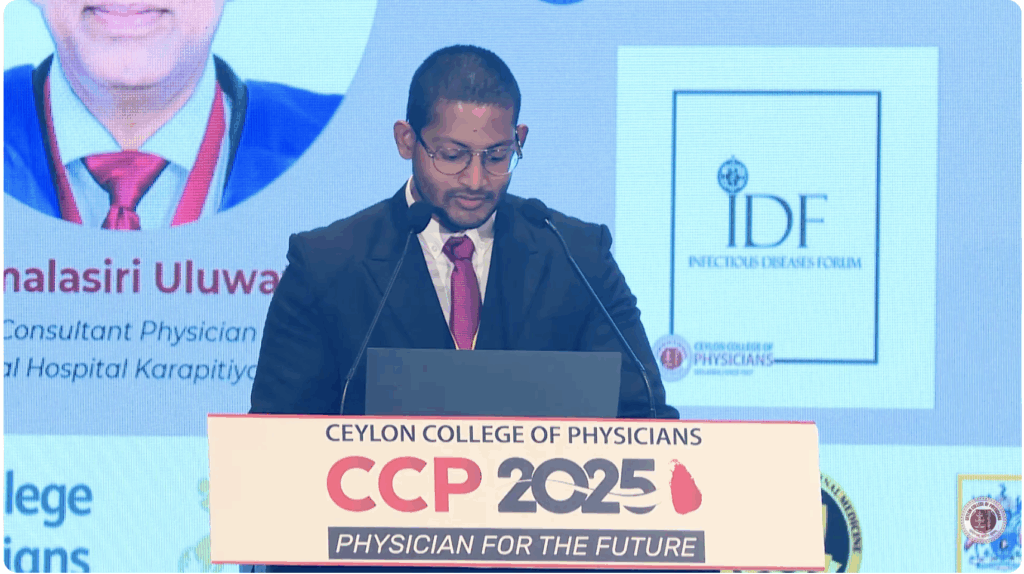
Symposium on Infectious Diseases
- October 15, 2025
- 1:50 pm
The Symposium on Infectious Diseases gathered healthcare professionals and researchers to address emerging and re-emerging infectious threats.
Experts discussed recent outbreaks, antimicrobial resistance, and advances in diagnostic and preventive strategies.
Sessions explored the impact of climate change and global travel on disease transmission patterns.
Innovations in vaccine development and public health surveillance were key highlights.
Collaborative approaches between clinicians, microbiologists, and policymakers were emphasized to strengthen preparedness.
The symposium served as a platform to share knowledge and promote global health security against infectious diseases.
Summary
Symposium 18 focused on infectious diseases, featuring lectures on antimicrobial resistance (AMR) in Asia and infections in immunocompromised patients. Key AMR challenges in Asia include overuse in livestock, poor stewardship, limited new antibiotics, and rising resistance rates. The second session covered diagnostic and management complexities in immunocompromised hosts, illustrated by case discussions. Emphasis was placed on tailored antimicrobial use, infection prevention, and multidisciplinary care.
Raw Transcript
[00:00] Ladies and gentlemen, welcome. We now proceed to symposium 18 in whole B dedicated to infectious diseases, which will be covering antimicrobial resistance, infections in the immunocompromised, followed by a case-based discussion. It's my pleasure to invite our chairpersons.
[00:20] Dr. Wimelseer Uluvatage and Dr. Anandavijay Vikram. I now warmly invite our chairperson to introduce the speakers and panelists for the session. Good morning. Welcome you to the session on symposium 18 on infectious diseases.
[00:40] We have two speakers and then a case discussion. For the first talk I would like to invite Dr. Soumya Iktratuda. She's a physician, academic and public health leader with over two decades of experience in internal medicine, infectious disease and health care system.
[01:00] She currently serves as the associate professor of medicine in King Edward Medical University, Laho. She had been the founding secretary of the Pakistan Society of Internal Medicine, and she has been serving in that position for the last five years or so.
[01:20] I must say she is the live wire of the society and I had the pressure of meeting her couple of years back when she was working on Dengue. She was the lead author of Punjab government official clinical esophage for Dengue and COVID-19 and she had contributed to major textbooks and her
[01:40] has earned her Presidential Award of Excellence, Governor's Award, Eltaikin Award, and the Chia Zola's Fellowship at Oxford University Institute of A. She is going to talk to us on antimicrobial resistance in Asia, challenges, and the way forward. Over to you, Dr. Thompson. Thank you very much.
[02:00] Thank you very much, Dr. Ananda, for your very kind introduction and thank you to the Ceylon College of Physicians for giving me the opportunity to talk to all of you today. Ladies and gentlemen, do you know what is the loudest sound in the world? It's not a bomb. It's not a volcano either.
[02:20] It is silence. A silence, if not treated or heard, can cost us 10 million deaths by 2050. In the shadows, a deadly threat spread. Relentless.
[02:40] Antimicrobial resistance silently undermines the modern medicine, great achievements, threatening to reverse the decades of progress. As infections become increasingly untreatable, the question looms. Will we unite to combat AMR or will it claim more like AMR?
[03:00] lives. The choice is yours. Ladies and gentlemen, my name is Dr. Somya and today I'll be talking about antimicrobial resistance with a special focus on Asia and the challenges we have and the way forward to handle this challenge. Here are my disclosures.
[03:20] but I have no conflicts of address for this presentation. So throughout the history, there has been a continuous battle between human beings and multitude of microorganisms that cause infection and disease. But with the discovery of the penicillin by Sir Alexander Flaming and its subsequent development,
[03:40] development by fluorescence and chain, there was a revolution in the treatment of infectious diseases, bringing down the mortality related to infectious diseases and thereby increasing the life expectancy. But just imagine antibiotics which protect us from these deadly infections.
[04:00] this stop working. Because right now we are standing on the edge of the world where antibiotics which are most trusted weapons they've become silent. A scraped knee, a routine surgery or a child's ear infection can go to bed again.
[04:20] And this isn't fear-mongering, this is science. Antimicrobial resistance is a silent countdown and the clock is ticking faster than we admit. Over the next 15 minutes or so, we'll try to uncover why this crisis is everywhere.
[04:40] problem and how we can rewrite the ending. So 1.14 million lives gone every year not from wars or disasters but from infections we thought we'd conquered. pneumonia, tuberculosis, sepsis,
[05:00] diseases once bowed to antibiotics, but now they laugh at us. And this is the AMR's body count. But here's what gives me hope. We are not blind to the roots of this crisis. Scientists are racing for new drugs, governments are tight-knit,
[05:20] frightening antibiotic policies and farmers are rethinking how they treat infections in the livestock. We are trying, trying. But are we trying enough? This is the question. Let's be brutally honest. Something's broken. Our systems, our habits,
[05:40] They're leaking antibiotics like a sieve and microbes, they are learning, evolving, outsmarting us every single day. What are the challenges related to AMR? Let's have a look. Every day we are making a dangerous mistake.
[06:00] prescribing antibiotics when they are not needed. These pills on the palm you see in the picture, they represent more than just medication. They're contributing to a global crisis of antibiotic resistance, and now as the text warns, the mistake is coming back to haunt us. It's the time to heal.
[06:20] we confront this reality before it's too late. This is where the resistance crisis goes viral. Literally, crowded farms, stressed animals, and then antibiotics are pumped into feet not to treat diseases but to prevent it and to fatten livestock faster.
[06:40] they're given antibiotics. And this keeps the process rolling. We are using medicines as band-aids for bad farming and microbes are taking notes. So where do most antibiotics go? Not to sick people unfortunately. 70% are fed to the animals like
[07:00] these chickens, and these breeding superbugs in our food, and these buds, then they jump to us. And every bite risks the medicine that won't work when we need it. So can you guess how many years it takes to develop one antibiotic, any one of you?
[07:20] Is it two years? Five? Maybe seven? Ten years. Ten years of trial and error, ten years of dead ends, and ten years of pouring billions of dollars into research, only to maybe get one drug that might work.
[07:40] 10 years to create a new antibiotic and you know how much does it cost? See, this is the pile of cash, 1.2 billion US dollars. That's what we spend every year on antibiotics. Money down the drain, unfortunately.
[08:00] significantly, because superbugs grow stronger and then they become resistant. So your money is your risk and we're paying for the resistance with our health. And you've just spent 10 years and $1.2 billion on a breakthrough antibiotic.
[08:20] Can you guess how long until the bacteria outsmart it and it becomes resistant? Five years? Less? More? So two years. So two years before you finish paying off your car and the antibiotic has become resistant.
[08:40] These are haunting us with every new pill. So why the drought? We picked the low-hanging fruits actually. The soil microbes, our old allies are tapped into labs, recycle the old drugs with tweaks like rearranging deptures on the titans.
[09:00] Meanwhile, the bacteria, they invent resistant genes and they are like TikTok trends, I would say fast, viral, unstoppable. And very few antibiotics have been developed in the last 20 years. Most new antibiotics are actually variations of existing antibiotics.
[09:20] And only five novel classes have been developed in the last 20 years. And here's the scary truth. Even in labs, we are running out of weapons. Only few new antibiotics truly work. While superburgs are getting stronger, the antibiotic discovery is limited and whatever.
[09:40] is discovered becomes resistant. In 2023, only 3 out of 43 antibiotics in development targeted priority pathogens. The rest, they were just like band-aids on bullet points. We are stuck in a loop of diminishing returns and microbes, they're all
[10:00] laughing at us and they are resistant. But what if we flip the script? Imagine a world where infections really happen, where vaccines block the super bugs at the door, where hospitals are designed to repel pathogens, where farms don't breed resistance, where we
[10:20] stop infections before they start. Prevention sounds simple, right? But building better hospitals, washing our hands, using clean needles. Prevention is a privilege, ladies and gentlemen. Half of the world lives in gleaming cities with UV-sanitized operation theaters.
[10:40] But what about the other half? They are fighting infections with muddied water and open cereals, and AMR doesn't care about borders. See this child? Basic needs missing. Safe water, toilets, waste control, and superbowls love wealth. Without these,
[11:00] infection prevention fails and we are all at the risk. Think about the places we trust most, hospitals to heal us, schools to protect our kids, offices to keep us safe. But when hygiene fails, these places turn into factories for superburgs and antiques.
[11:20] hospital bed, a shared kitchen sponge, a classroom doorknob, tiny oversights with colossal consequences. These mats and blankets, 3.85 billion people, walk into clinics like this. No basic hygiene and germs then spread freely.
[11:40] vulnerable. 3.5 billion people, that's not a number, it's a tsunami. A tidal wave of human beings forced to live without toilets or dignity. Half our planet wakes up every day to a brutal choice, drink contaminated water or die of thirst.
[12:00] And this isn't just a tragedy, it's a global lab experiment for AMR. Untreated wastewater? It's a genetic swap meet for the superburgs, resistant genes from spams, hospitals, sewage, the mix freely. In year 2023, scientists found a resistant gene from last year.
[12:20] resort antibiotics in India's Ganges River. And in Detroit, aging pipes leak waste into the great lakes, the same lakes which are also supplying drinking water to 40 million people. So AMR isn't over here. It's in our backyards, our bodies, our DNA now. So we talked about human-made
[12:40] failures, greed, inequity, and short-term thinking. But there's another force, turbo-charging AMR, the one we can't ignore, nature itself. Natural disasters are AMR's accelerators. In Pakistan in 2023, floods submerged 1 third of the country, mixing the
[13:00] sewage and the cholera antibiotics ran out. So resistant genes spread like moon-soon drains and as darks pushed farmers to overuse antibiotics on the stress livestock, the cycle further escalates. So nature isn't just fighting bad, it's outpacing us. So picture this. Millions of livestock
[13:20] daily, and they carry invisible passengers which are resistant genes. And climate change is supercharging the antimicrobial resistance. Rising temperature means more antibiotics are pumped into stressed livestock. At the same time, melting of a permafrost is unleashing the
[13:40] transient drug-resistant pathogens. And this creates a vicious circle, resistance spread on farms and then jumping onto humans. We are not just fighting microbes, but the consequences of our own recklessness. The data from the leading experts is clear and alarming. AMR is not just a future thing.
[14:00] and it is present and more so in Asia. This makes us all the region which we are living in the most critical battleground in the global fight to safeguard modern medicine. The drivers of AMR in the Asia are powerful, interconnected and accelerating. A massive
[14:20] population boom is colliding with a projected 150% surge in the pollatory production, and this will inevitably drive the antimicrobial use in animals by up to over 10%. And compounding this week water and sanitation system, this creates a direct pathway for resistant pathogens
[14:40] to spread, making Asia acutely vulnerable to this silent pandemic. Asia faces the middle catastrophic AMR costs as well. Millions are pushed into poverty by health spending, JDP decimated, and urgent stewardship, targeted financing and regional collaborations.
[15:00] are our only defense against this human and economic collapse. This is the report of the WHO, which is the aware report on antibiotic use published in 2022, and it uncovers a dangerous imbalance. In many Asian countries, there's an over-reliance on what group drugs,
[15:20] with a higher resistance potential that should be used sparingly. And this combined with significant data, GAPs is fueling the fire. The priority is clear that we must strengthen the stewardship and shift prescribing towards safer, excess antibiotics to detect these essential drugs for the future.
[15:40] Country-level data makes the crisis tangible in India and China, which shows alarmingly high use of watch antibiotics, reflecting the deep-rooted prescription practices. Even in Thailand and Indonesia, you can see the trend persists. This isn't isolated. It's a regional emergency.
[16:00] And shifting prescribing behavior towards excess antibiotics is no longer optional. It's essential if we want a global health security in place. So over the five years, a clear and a concerning trend emerges. So what antibiotics use is rising steadily across the Asia, while excess antibiotic
[16:20] antibiotics are declining. And this dangerous shift directly fuels the resistance. Without urgent intervention, the trajectory will render our most critical drugs ineffective. Look at the figures. The AMR deaths will skyrocket across Asia, millions which are preventable by 2050.
[16:40] This looming catastrophe demands urgent action. Containment investment isn't a cost, but essential to avoid trillions of dollar economic collapse. And Pakistan faces a severe AMR crisis, intensified by climate disasters like repeated floods, which accelerate the outcome.
[17:00] outbreaks. The numbers are stark. Over 59,000 deaths directly attributable to AMR in 2019 and more than 221,000 deaths associated with it. Resistance to key antibiotics like third generation cephalosporins, they exceed more than 50%
[17:20] hospitals. So I would say Pakistan isn't just a hotspot. It's a warning signal for the region, unfortunately. Look at India, which carries one of the world's largest burden of antimicrobial resistance. The scale is staggering. In 2021, resistance was directly responsible for over 267,000
[17:40] and linked to nearly 1 million. Surveillance data from 2023 shows carbapenem resistance and nearly half of all Klebsiella bloodstream infections, and these figures underscore a national health emergency that demands immediate and coordinated actions. Coming on to Sri Lanka, it's
[18:00] failing, facing a silent health crisis. Their new national strategic plan reports alarming antibiotic resistance across major pathogens, and the numbers tell an urgent story. A shocking 72 percent of klebsiella and ammonia infection are resistant to ciprofloxacin. Over 60 percent of E. coli resist key antibiotics.
[18:20] With more than half of deadly bloodstream infections are methicillin-resistant, it signals a breaking point. Sri Lanka's data is an all-clear call for reinforced action. Look at China, which faces a massive AMR burden driven by its large population and complex healthcare landscape.
[18:40] that are revealed persistently high resistance in critical pathogens like Acinetobacter, Buminae, and Clapsiala. The stakes are existential. 160,000 direct deaths and 710,000 linked to AMR in 2021 alone, with resistance rating unchecked.
[19:00] China's battle against superbug is now the frontline defense for global health security. Bangladesh, no difference, expanded AMR surveillance to 11 centiline sites. Yet, data reveals surging resistance in enterobacter, especially third generation cephalosporins, with over 260,000 AMR
[19:20] related deaths in 2019 and persistent high resistance and critical bacteria, this public health emergency demands immediate intervention. So the question arises, what actions need to be done now? Or should we wait for 10 million deaths by 2050, costing us trillions of global
[19:40] globally, is there a solution? Let's calibrate what's the way forward. So the solution lies in the antibiotic stewardship and we all know that we are lacking in it at the moment. According to CDC it is the effort to measure and improve the antibiotics.
[20:00] the way they are prescribed by clinicians and the patients how they use it. And according to WHO, it is a coherent set of actions which promote the responsible use of antimicrobial. The emerging threat of AMR is growing exponentially and antibiotics to its chips are cornerstone to fight this global threat.
[20:20] So the role of antimicrobials to which help is to help all of us for the future needs of the patients and everyone else to use them with great caution. So antimicrobial resistance threatens our modern medical achievements. To address this crisis in Asia-Pacific region, there's a comprehensive
[20:40] which has been built on four core strategic pillars. First, surveillance and data integration to establish real-time monitoring, then research and innovation, which drives the development of new antibiotics, and third, education and training implementation, with standardized curricula and training programs. And fourth and most important,
[21:00] importantly, policy and regulation, which creates unified guidelines and appropriate restrictions to ensure responsible use. Together with these pillars, we can safeguard the treatment for future generations. So I'll conclude here with the thought that knowing is not enough, you must apply, and willing is not enough.
[21:20] enough, we must do. Thank you very much for your attention. Thank you very much Sohmya for that excellent lecture and we can take one question from the audience.
[21:40] I think a wonderful lecture as expected from Sohmya. I just want to highlight that in these developing countries like us in Pakistan and Sri Lanka, the main use, you know, is for
[22:00] know, of the antibiotic is with the animal and the agricultural side, which I think contributes much more to the than the human health. So I think we need to improve in the poultry side and the animal side because they like in Pakistan,
[22:20] because we import most of the raw materials. So 90% of the antibiotic raw material that is achieved. And in one of my studies, which was published in PLOS ONE not long ago, where the salmonella infection, 60% of the blood is released.
[22:40] percent of the strains were, and this study was all over Pakistan. So, salmonella is really going to be a huge problem in the future. So, I thought, and we need, if we need to curb the antibiotic resistance, as you so elegantly said.
[23:00] must focus on to the animal and the agriculture. So as I mentioned, 70% of the antibiotics are actually given to the animals and only 30% to the humans and then they develop resistant and then they jump to the human and also very rightly said in Pakistan actually the sad story is that for
[23:20] resistance, eusyprofloxacin, and third generation ephrosporin, leading to XDR multidrug and then the XDR typhoid, which became the highlight and the top medical use of the tongue. Sadly, we are all working, trying to work, but something is not working, and there is very little
[23:40] discovery of newer antibiotics. The older antibiotics with some tweaks are launched and then they become resistant. So this is really something which is very alarming and this actually is the silent pandemic which is costing us millions of lives. Thank you. Okay thank you very much. I would like to invite my co-chair Dr. Anand B.J. Krum to
[24:00] delivered the certificate of appreciation.
[24:20] Next speaker is Professor Brian Nangus.
[24:40] He's the director of Oxford Centre for Clinical Tropical Medicine and Global Health and reader in infection disease at University of Oxford. His current research focuses on clinical trials and vaccine development for NEPA, COVID-19, malaria, influenza, HIV, and enteric fever. At the Oxford
[25:00] He's a clinical tutor in medicine, professor of practice in medical education and director of graduate studies. His chosen topic today is infection in immunocompromise, diagnosis and management. Over to you, Professor Angus.
[25:20] Thank you very much and thanks to the organizers for inviting me to this very friendly and welcoming conference, particularly to Praveen. I think infections in immunocompromised
[25:40] hosts really bring into focus what the previous speaker was talking about with antibiotic resistance. Mostly the thing that protects us first of all are immune systems, and so patients who are immunocompromised don't have that barrier and are very dependent on some of the therapeutics that we have.
[26:00] So I'm going to talk first of all a little case history and I'm going to fit this in. I may need to go fairly quickly. So in Oxford we had a patient recently, 67 year old man, who'd come from Nigeria to visit his daughters, one of whom was having a baby, and he felt unwell within about a week of arriving in the UK. Now
[26:20] We often get a little bit worried about birohemorrhagic fever, so we risk-assess them, and there was no risk for lassa fever, which is the thing that we're particularly worried about. We had a two-day history of fever, reaching 1,395. He'd had some paracetamol, and he'd also bought some ciprofloxacin over-the-counter from Nigeria, but he'd taken that and not felt better.
[26:40] He also had headache and some right-sided plebiscus pain. He wasn't entitled to free NHS care, which is something that was important in discussions with him. And as I say, we didn't think his risk of high consequence infectious disease, lassa fever, as we would say it was at low as he visited the UK.
[27:00] His past history, and again this is very pertinent and common in patients that we see, he is a live unrelated renal transplant for otsaldim dominant polycystic kidney disease in August of 2023 in Lagos, Nigeria. He also had some other things, hypertension, asthma, and so on.
[27:20] thyroid swelling. He was a retired professor of ecology and a Jehovah's Witness which again will become relevant in how things are developed. He was non-smoker, no alcohol and usually independent. He was taking some drugs particularly immunosuppressives, microphenolate, put mislone and tacrolimus and had been taking some ciprofloxacin.
[27:40] Unfortunately, there is some interactions with some of these drugs. He was not on any antibiotic prophylaxis, which is commonly given to patients' transplants. His real background, which we return to in a little bit more detail, but obviously didn't have that much information from Lagos, was that he had a living, unrelated donor. The HLA and the CMV status
[28:00] of the donor were unknown, and he had been admitted to the hospital in Nigeria because of T-cell mediated rejection on the scans and reduced renal function. And he'd been given a big dose of IV methylprednisolone, further immunosuppressing. The diagnosis of T-cell rejection, he
[28:20] had told us it's usually made on a biopsy but he didn't remember having a biopsy. And also this had led to an increase in his maintenance and suppression. When we saw him get bilateral basal crackles when he came into the medical take, he had a skin abscess in his left lower jaw that had healed and looked quiescent, wasn't tender.
[28:40] examination was normal. His blood test showed impaired renal function and a hemoglobin of 72, which is reduced with a sodium of 116 reduced and a raised CRP. We took some blood cultures, and in fact this is his chest x-ray, and initially we thought there was some right upper left.
[29:00] We thought that we probably had pneumonia. So he was discharged in fact with amoxicillin and doxycycline, which would be standard for communicative pneumonia with a low carb score. Six days post-discharge, the laboratory flagged that his blood culture was growing in the cardia, Cyrus c. georgica.
[29:20] which used to be called asteroides, which is much more easy to see. So we called the patient up and we arranged for him to come back. And because he'd done the cardia, we were a little bit worried that it paid spread to other places. This is a CT scan and it shows, in fact, those changes in the right upper lobe were much more extensive than we thought with cavitation.
[29:40] already happening. And when we scanned his head, we found in fact that he had several abscesses you can see in the MR. So as summary of his investigations, multiple cranial abscesses and on MR and CT, we looked to see if he'd any
[30:00] of endocarditis but under transterasic echol immunovigidations. Having grown the bug in the lab, we then look to see the sensitivities. Riccardia is often resistant to lots of different antibiotics and you can see we compared these to the UCAST.
[30:20] points for the therapy to try and guide things. So clinical issues summarized at that point where he disseminated the cardiosis or bacteroomia, lung involvement, multiple brain abscesses, and failing graft function. And he also had anemia in the context of this failing graft and he was unable to have blood transut
[30:40] of his religious beliefs. He also had some possible candidate esophagitis with some difficulty swallowing and he developed diarrhea which was C-def-positive, again very typical in patients who were immunopromised. So we started on an IV meropenem as a sort of intrameasure to do things.
[31:00] until we knew what the sensitivities things were and then we switched to IV cotriamoxazole. Unfortunately when we did this as is often the case is kratnim rose again. So we switched into kefteroxone again guided by the MICs. We were trying to arrange for him to have outpatient therapy with IV kefteroxone twice a day which we often do with our whole
[31:20] home IV service and particularly this was facilitated because his daughters in fact were both nurses working in the hospital. We gave him some oral vancomycin for his C. diff and he was started in some oral sort of conazole for his oral thrush and again very typical of immunocompromised patients that we have to use.
[31:40] lots of different agents against lots of different pathogens. So as Kratan enrose and his hemigle been filled further, thought again because of sepsis and the feeling grafted, but otherwise his electrolytes were okay. We did a scan of his kidney to check, we had missed obstruction, and we asked the venal colleagues to talk to him. They were a little bit concerned about fluid
[32:00] The con is all affecting tachrylomus levels, and so we switched to nystatin. They stopped the MMF because of the Nechardia infection, but kept him on the tach, and he continued on for a disallone. And as I say, this is a background of someone who'd had previous T-cell rejection, so he didn't want to reduce his tachrylomus too much.
[32:20] some erythropoietin to try and help with his anemia as he wouldn't accept a blood transfusion. He was admitted on the 23rd of July, discharged on the 31st of the week on ID keftaroxone and meropenemvus pic. We arranged for an outpatient MRI scan which was reassuring. We wanted to continue again for an account of the I.D.
[32:40] have to treat for a long time. So the combination IV therapy for about 60 days and then we planned to switch to comoxone minocyclone for a year. The plan was to supply the minocyclone and we would give him antibiotics to be able to get back to Nigeria when he went back. Unfortunately his trachnid got worse.
[33:00] And we then checked for other reasons that he's trapped and it might get worse and he also had BK virus. So he had 4.808 log 7 copies per ml in his blood and the only treatment really for BK is
[33:20] to reduce the aminose impression. So we started to reduce the tacholymus and constantly measuring levels. In fact, the renal physicians wanted to do a renal biopsy and when they did they found florid BK and ifopathy with inclusion bodies. No evidence of rejection and so again treatment was a reduction.
[33:40] or immunosuppression, but they felt that actually they were ready at this level. So in the end, patients were back to Nigeria, so we don't know what happened. So the cardia, ubiquitous and saprophytic, lives in often wastewater, as been mentioned before, common site for pathogens to
[34:00] emerge and is partially acid-fast. It grows as those filamentous branching rods and there are four common species, Novabrizilia and its Farsinia and then Syrosae georgica, which was asteroides. It's usually identified in AFB and also on the Gram stain with these branching bidi rods.
[34:20] Speciation is very important for antibiotic therapy and we usually do sequencing of 16S RNA in order to speciate so it has to be a reference lottery. The cardiac is worldwide but particularly in temporal and trochlear areas. Two incidence of disease is unknown because diagnosis can be quite difficult.
[34:40] In high-resource countries it's estimated at 0.3 to 1.8 cases per 100,000, and it's higher in a new compromised patient, for something else to think for. Say in tropical, low-middle-income countries, the incidence is probably higher but underreported because of limited diagnostics. And there seem to be some seasonal peaks commoner in the warmer months.
[35:00] centimeter clients. Clinical manifestations are the main route of inoculations through the respiratory system, but you can also see people, particularly farmers, who get traumatic injuries with direct inoculation from soil. It's a subacute onset, it may well be that the healed abscess that you had in his jaw was the first sign of the cardiac.
[35:20] Usually when it causes the respiratory illness, it's used with typical cough, demopsis, fever, weight loss with constitutional syndrome. And the one thing to remember is mortality, in fact, is very high, 55% mortality, cerebral infection. So long is most common, extra pulmonary dissemination in lots of cases, although again, the data is a little bit.
[35:40] difficult and brain is the second most affected organ and patients are presented with headaches and seizures. And then you see skin nodules and abscesses. This is a picture of primary cutaneous nacardioses with extension into the muscle and into the pleura, in fact. So antibiotics are the mainstay, but they say there's a lot of resistance there.
[36:00] varies with species and it requires prolonged treatment, 6 to 12 months. Sometimes patients are given boosts through the immune system with interferon gamma, but again there's no good evidence for that, and surgically the brine is often required as well, which can be quite extensive. There are no controlled trials for treatment regimes for the cardiac, but usually
[36:20] and cotrim in it, crabropenem and linezolid have been used in life-threatening situations. And again, no real data for this. The antimicrobial susceptibility, you can see, asthroid is on the end, and you can see that it varies between species. The things that are normally sensitive.
[36:40] are things like linezolid, whose main complication is anemia. So we were really stuck with this patient. And amucacin was made in side-effective renal toxicity. So again, wanted to try and avoid. So the take-home message really about immunocompromised patients is it's the opposite of Ocrim's razor. So hiccomystictum is that the patient can have as many diseases as they want.
[37:00] as easy as they want, and this is true in immunocompromised patients. If patients have nikardia, then you have to think of it long in the brain. It's acid-fascible like TB and has very high mortality. So just to summarize the little things in general, and I just wanted to have a little look at actually immunocompromised patients are increasing in number throughout the world.
[37:20] And so I'll do a little brief summary, particularly related to travel. There's a lot of our patients who are immunocompromised are going overseas. So the main sort of thing that people recognise is HIV and of course about 40 million people will enter into 2024. And then the primary immunodeficiency
[37:40] difficult to know. And again, we heard about some genetic disorders as more than in Pakistan. And again, these primary immunosufficiencies are poorly diagnosed, probably about 6 million in the world. And then secondary, so these are the things that medical interventions are causing immunosuppression. So active chemotherapy.
[38:00] probably about 11 to 12 million per year in the world who get chemotherapy that will affect the immune system. And then we have the solidoracin transplants and again the CHAP from Nigeria, the Nigerian centre is one of the biggest centres for renal transplant in Africa and all is an active renal transplant programme in short.
[38:20] So this is just breaking it down to region, but again, these numbers outside of Europe and North America are very sketchy. Diagnosis, particularly primary and immediate deficiency, is different. There's common pathogens so they can be affected by anything really. So bacteria.
[38:40] microbacterial salmonella, as we mentioned before, but also other soil things like mycardia and actinomyces. The viruses we tend to monitor quite a bit and we check for hepatitis and we also tend to monitor CMV, very common ubiquitous virus. Fungal is becoming an increasing problem as well and again as far as antimyte-
[39:00] sensibility is concerned, fungi are emerging as a real problem as well. So recent outbreaks of things like candidate aureus, contamination of lumbar puncture, intrathecal chemotherapy for example, raspogilis. And then parasitic again common in the tropics, particularly things like malaria.
[39:20] were more prone to, but also other things like stromdoloids and leish. So there are lots of risk factors that come along. Some of the figures, as I say, for solid organ transplants, you can see that it's increasing year-on-year. And this was usually estimates for the numbers in 2023, but there will be much more to estimate. The diagnostic challenge
[39:40] particularly in the topics are that there's limited access to diagnostic tools and when you're immune to compromise the code your immune system won't produce antibodies so you often serology is very unhelpful so you really need to have an antigen or a nucleic acid detection system or culture systems and or these organisms and as the diagnostics are often lacking.
[40:00] Often the patients present in an atypical manner. They don't mount fever sometimes. They don't have the usual presentations that we see. Co-infections, often patients have more than one infection. Again, very difficult to treat. And remember, hiccum is tic-tac. They can have anything they want.
[40:20] point of care diagnostics because patients' serum is compromised to deteriorate very quickly. So often they get empirical therapy, again, adding to the problems of antimitrovicillin resistance. So management strategy is really early recognition at empirical treatments. Everyone knows about how to treat neutrically excepsis, and we have guidelines in order to do that.
[40:40] Prophylactic antimicrobials are used in high risk patients and again we try and avoid these, but in patients who are immunocompromised they may well be the last line of defence. We need to strengthen health systems and access to care and tell patients to come very quickly if they feel unwell. And there are guidelines from WHO and CDC for managing infection.
[41:00] and the compromised hosts. And then one thing that hasn't been mentioned yet is vaccination. So we try and get ahead of things so prevention is better than cure. So we have a system where we try and screen people. And of course if you can do it pre-eminuous oppression then that's great and we have a screening system looking for things.
[41:20] like hepatitis B, hepatitis C, HIV. We also screen for tuberculosis. There was a talk a day or two ago about screening for latent TB. And again, if people are positive, then they can be treated for latent TB. And then there are other things that we consider screening in compromised patients, things like EBV, which is associated with lymphoma, a CMV.
[41:40] which again associate with things like hepatitis and immunitis as well as colitis and then toxoplasma as well. We try and ensure that people are vaccinated before they're immunosuppressed and so things like COVID vaccine, flu, pneumococcus, varicella and meningococcus before therapy and then think about trying to give anti-biotic to prophylactic anti-biotics.
[42:00] So the guidelines of VA according to which sort of immunosuppression you have and particularly related to things like risk stratification. So for stem cell transplants, for example, early on, it's very important to protect patients from the environment with hepa-filtered air and positive air pressure and then evidence-based prophylaxis and vaccination protocol.
[42:20] For HIV, again, particularly there are lots of guidelines related to primary prophylaxis with low CD4 counts with cotrim and then secondary prophylaxis with what we find in vaccination as well as important particularly for hepatitis, pneumococcus and HIB. There are some guidelines for immunocompromised travellers, so people who are going to
[42:40] areas with high risk of severe enteric infection and of course immunocompromised patients are at risk. So things like Campylobacter, Cryptosporidium, and Lystalea. And often we get into a situation where people have intractable Cryptosporidium for example which is very very difficult to treat and often things that are very difficult to treat and take a long time lead to increasing problems with resistance.
[43:00] vulnerability to fungal diseases, and particularly things like pthalleromyces of penicillium and encythosasia and coccidomycosis in the Americas. There's also some evidence that people who are immunocompromised are more prone to arboviral infections, so things like rituximab that deplete B cells at markedly increase the risk of fatal
[43:20] or a bovirus-movinvasive disease, and as I said, sero-rootlogic is unreliable. So just going quickly, some of the drugs, and I think this is a constantly changing landscape of some of the things. This is golden era in cancer therapy, but it does mean that there are more and more complications from cancer therapy as well. So things like steroids, good old-fashioned.
[43:40] strong things, but of course it does make you prone to lots of different infections, and particularly the well-recognised strong aloydies, hyperinfection syndrome, again, we're seeing this more and more. Calcin urine, hybrids like Dacrolimus, again, opportunistic infections, CMV, BK, GC, pneumocystis, particularly, but also other things like ureterone.
[44:00] infection, skin infections, and fungal. As seen in the lemmas, mTOR inhibitors, again, widespread susceptibility to different infections. And then the antipylifitativ anti-metabolites, again, common infections, but think particularly of listeria and urococca infections, as well as zoster and CMV.
[44:20] Jack inhibitors are fairly new drugs that we use quite a lot during COVID and again seem to predispose people towards pneumonia, and also particularly herpes zoster, and so we try and make sure that people are vaccinated against zoster beforehand. There are more and more biologicals and monoclonals, TNF alpha inhibitors, particularly adalimma
[44:40] and Fliximab and Tesserit, as well as the B-cell inhibitors of Rituximab. And they are prone to lots of things, but TNF, alpha inhibitors, particularly TB reactivation, other things like Stelia and Legionella. Rituximab are really viral infections of particular problems, particularly HVD.
[45:00] agents. So new things come along, echolismab, anti-compliment, which seems to make people prone to a meningococcal infection and, again, vaccination very important. So vaccination principles, um, got to avoid live vaccines, of course, in immunosuppressed people, unless you can get them in before they become immunosuppressed, and it's important to make sure that you use inactivated
[45:20] vaccines that are known to be safe. We also vaccinate household contacts in order to protect people. So these are the vaccines that are recommended and particularly again the new one in the UK particularly is Shingrits which is an inactivated vanicel vaccine. For organ and stem cell transplants there are lots of guidelines and again
[45:40] we often say to people to carry documentation just showing what vaccinations they've had because we don't want people vaccinated at the border. So other things just to remember, people are travelling. Malaria prophylaxis, people who've had a splenectomy have the spleen removed, there are increased risk of severe malaria.
[46:00] important to emphasize like all travel for food and water hygiene because vaccine efficacy in immunocompromised patients against things like typhoid and cholera and certain and try and avoid high risk exposures particularly animals and very important ensure travel insurance. As you can see from our patients in Nigeria food no insurance.
[46:20] ended up with a very big bill. So that's quite a summary. I'd just like to thank people involved in the thing and also don't forget about HIV but also don't forget about other immunocompromised patients and we saw that in COVID where people with immunocompromised were told basically we had to stay at home and shelter away from everyone else.
[46:40] And so that's the other important thing about vaccination. It protects people. If you get vaccinated, it protects people who don't have a good system from getting infections. Thank you. Audience member applauds. Thank you very much, Professor Angus. May I invite you to take a seat?
[47:00] it in the stage, please. We are not allowing any question time. After this, for the reason that the next part of the symposium is sort of a continuation of the same topic. So the next step will be a case discussion on infections in the immunocompromised. And for this, may I invite Dr.
[47:20] Dr. Chahanakaberatna, consultant nephrologist. Dr. Tula Herat, consultant nephrologist. And Professor George Alangdian is joining us virtually. And the session will be moderated by Dr. Lachmalph-Ansega. We have to extremely.
[47:40] Thank you. I'm very thankful for Professor George Langdon, especially he's joining us from the US and he's the director of transplant in bacterial disease at Henry Ford Health and clinical professor of medicine at Wayne State University and Michigan State University and Dr. Langdon.
[48:00] clinical work and research is in the prevention and treatment of infection in transparent recipients and other immunocompromised patients is well published in these areas of research. Thank you very much for joining. Thank you so much for the introduction.
[48:20] It's going to be a complex case that we are discussing today, mainly seen by Chanakar. And Chanakar, I invite you to start presenting the case. Yes. So to set this stage for today's discussion, I would like to start with this case. So this is an infection in the immunocompromised patient.
[48:40] Is it 50 years old male patient? He had a long history of diabetes and hypertension for 15 years. He defaulted follow-up before the transplant, had a transplant six months back. It was a live donor transplant and uncomplicated.
[49:00] surgical or the immune-medial complication during the transplant. The immunosuppression was maintained as therapy with the tachrolimis, mmF, and red naciron. At six months after the transplant, it came with fever for three days. The hybrid fever
[49:20] progressive shortness of breath and respiratory distress. On examination, he was dehydrated, he was in respiratory distress, tachypneic and tachycardic. Blood pressure was slightly low with 100 by 60 and saturation was 88 on rheumia.
[49:40] There's a bilateral crepe in low and middle zones.
[50:00] And electrolytes panel were normal at the time of admission. The arterial blood gas gave you significant hypoxemia with severe acidosis. Bicarbonate was 15 with, it's a combined acidosis with lactate-driven acidosis plus, ongoing acute ketone plus, background sepsis. So chest exterrale we will.
[50:20] the bilateral patching filtered basically in the perihyl region but involved in all three zones. So this was how initial management, he was very dehydrated, started IV normalcy line and he didn't, for the oxalem therapy started initially CPAP and then the intermittent CPAP plus high flow.
[50:40] All the cultures sent blood during his futum, early HRCT arranged. The background history of immunosuppression, we were forced to start broad-spectrum antibiotic IV meropenema and tachopanin. Immunosuppression, MMM-fital, reduced the dose of tachrolimis and prednisone dose escalated.
[51:00] Yeah, so we have come across a patient who has undergone renal transplant six months ago and on immunosuppression at the moment and The impression is the patient is having a febrile illness with lung infiltrates hypoxia So it's likely a pneumonia that we are dealing with
[51:20] are seeing this patient bedside, I would like to ask from Prof. Alangadan how can we approach this kind of patient, you know, digging deep into the history and examination and what are the initial steps that we should do in that, in the clinical features. Hi everyone.
[51:40] you all can hear me. Good morning to all of you all and good afternoon. It's about two years so I'm wide awake still and I just want to take a moment just to thank the organizers of the Sillan College of Physicians for this invitation and all of the
[52:00] Dr. Fonsaika and Ebonata for putting this great case together. I'm glad that Professor Angus went just before this because it segues very nicely into this case. So when presented with this case, as you summarized, it's a 50-year-old case.
[52:20] old male who is presenting six months after a kidney transplant with an acute onset of fever and rapidly progressive respiratory failure. And on his chest X-ray, what you see is patchy bilateral infiltrates. So when approaching this, sometimes it can seem very overwhelming because this is clearly an immuno-
[52:40] supress patient, but we could break it down by stepwise. You know, first is to understand how immune-surprised is this patient? And some of the pertinent things you might want to ask is, you know, what was the induction done for the transplant? Frequently kidney transplant patients get ATG,
[53:00] very severely suppressed T cells. So these patients are at great risk for intracellular pathogens which are predominantly viruses, fungi, and maybe things like Legionella listeria and so on. The second thing is to understand whether there were any acute episodes of rejection that needed intensification.
[53:20] of the immune suppression and subsequent. And one more thing sometimes which might be a clue might be the degree of lymphopenia, which often sets them off for infection such as pneumocystis and CMV. Like Dr. Angus mentioned, it's important to understand the pre-testing serostatus, particularly for the immune system.
[53:40] with CMV, was this a high risk patient where the donor was positive or the recipient was negative, or is this an intermediate risk where the recipient was positive? It's also important to know, did this patient have any testing for latent TB infection? Were there any X-rays that showed any abnormality?
[54:00] of previous granulomatous disease, EBV toxoplasma status. We also screen for stronge because that can sometimes show up. And then important to understand was this patient vaccinated, pre-transplant or even post-transplant against pneumonia pathogens such as influenza COVID and pneumococcus.
[54:20] Post-transplant, all of these patients get prophylaxis predominantly with trimethoprinse alpha methoxazole, which protects against pneumocystis and as well as maybe toxo and cardia to some extent, and valgancyclobrade, which protects against CME and HsO. So it would be important.
[54:40] to understand for how long did he get dysprophylaxis and when was it discontinued. It's also important to understand the post-transplant course was the stomach course with a lot of infections with MDRO, ductemia, MRSA. Were there any breakthroughs with BK or CMV because that will give you a clue as to how immune
[55:00] of this patient and then finally characterize this infection. As with any pneumonia, we always ask a history of any sick contacts because these are community respiratory viruses. Any unusual environmental exposure related to soil which could set you up for no-cardia molds, water which is.
[55:20] important thing here for us because of Legionella. And then what was the presentation? As we heard, it's acute onset, not a subacute process. There is fever, but there is no cough and there's no sputum production. So predominantly in this patient you're dealing now with an interstitial lung disease rather than
[55:40] and parenchymal disease with productive pneumonia and things like that. So I would say thinking of it is appropriate to start broad-spectrum antibiotics, but it's very important to understand there may be more than one infection, namely an opportunistic infection that's going to be present.
[56:00] capable of causing interstitial pneumonia. So that would be the way I would approach this case and direct my diagnostic workup and the management. What's your impression about the chest-side refindings? Can we go to that slide, Chag? And Prof can comment on that.
[56:20] that. Yeah, even though I can't see it very well from here, but I've seen X-ray before. So I would say it's a bilateral. To me it appears more like interstitial with possibly some nodularity. It's predominantly affecting the middle and lower nodes. There is
[56:40] no associated pneumothorax or pneumonia or pleural effusion. I don't see any lobar consolidation, so my concern for a typical bacterial pneumonia is low, but the risk for interstitial pneumonia such as pneumocystis, CMB, respiratory viruses is higher.
[57:00] It's very hard to tell from an X-ray because it might underread some of these things. So I guess you'll be moving on to getting, as you said, a high-resolution CT scan to better characterize these infiltrates.
[57:20] investigations that become information. Yes. Sorry. As Prof. Alendin asked, so the preoperatively, the mismatch was 110. The two of us also would agree with us. It's a fairly good match. The CRF is cumulative reactive frequency. That means antibody screening of the emissivity because he has not been sensitized previously. So there is no
[57:40] detectable HLA antibodies, so that indicates the degree of immunosuppression in the post-transplant period. The zero status of the donor and recipient both CMV-IGG-positive, so that falls under the category of intermediate risk of CMV reactivation after the post-transplant period. And the EBB-IGG-positive
[58:00] positive in the recipient and IGRA was negative and we routinely we are doing the MRSA screening before the transplant the subs of the groin, axilla and the throat all were negative. So induction done with IK-1 ATG, he's 50 years old age though the CRM was zero
[58:20] There were no antibodies. He had two blood transpositions. So, we were forced to go ahead with the coin ATG and two doses of IV nethalpactin serum viruses at the time of induction. Post-operatively, no post-operative adhesion secondary to the rejection, no infection. Its graft function was perfect throughout the six months.
[58:40] Otriemprophylaxis was given and valgancycline was given for 3 months, 100 days. At the third and sixth months time, blood BKV was negative, so that indicates a degree of immunosuppression. So there were no detectable BKV and CMV negative at 3 months, blood CMV, PCM and blood CMV.
[59:00] was negative. The last attack level was 6.5 nanograms per milliliter one week back before this admission. So the special is of prophylaxis at the moment, isn't it? So the prophylaxis stopped, the valganate stopped at three months according to the guideline and no he was on cotrimp prophylaxis even at the time of six months but of
[59:20] So, Prof George, if we think of the differential diagnosis here from the information what we have, how can we prioritize our differential diagnosis? It's a question for me. Yes. Yeah.
[59:40] Okay, yeah, so I think the information so far, we do realize he's not on any prophylaxis for pneumocystins. So clearly that moves up on the list of potential causes of interstitial pneumonia. We also know that CMV, even in inter-
[01:00:00] intermediate risk patients can reactivate at times. So the fact that it is post-valgan cyclovale prophylaxis also increases the risk of CME reactivation in this patient. So I do think that would be a very important piece of information.
[01:00:20] knowing the serostatus as well as the prophylaxis. So I think as we move along, I would certainly look at the two most common, I would say three most common would be respiratory viruses. You have excluded, I think, from what I can tell.
[01:00:40] You may have had the COVID and influenza test back by now. So that would rule out those two. There are other viral pathogens, but I think the rapidity of progression really makes me think more of pneumocystis in this context that is driving the process with a dry cough that maybe CMRs can use.
[01:01:00] might be contributing, but in kidney transplants, almost 80% or more of CMV end organ disease occurs in the gut. So they get the astroentritis rather than the pneumonitis, which seems to be relatively uncommon in kidney transplants compared to their lungs and other transplants. So I do think pneumocystis is a
[01:01:20] important thing to kind of exclude and a lot of our diagnostic strategies should be directed towards the diagnosis of pneumocystis. Yeah, next I would like to ask a question from Dr. Chulahaira. So other than PJP and also CMV infections, any other
[01:01:40] differential diagnosis that we can entertain, especially when it comes to tuberculosis. And if you can comment on how many of the tubular patients in renal transplant recipients that you have seen as well. Well, the news is just since the first things that come to my mind at six months.
[01:02:00] And two months after stopping prophylaxis for cotriamoxazole and valgancyclovir, but we have seen COVID and influenza present in the same way. Those two are possible, but I think it is a typicalosis, maybe a little too early, but it can happen. It doesn't look like a typicalosis.
[01:02:20] sending me the chest X-ray, but you have to exclude the, you said that you have done the T-pisest gene expert that has come as negative. So I would say the four things that I would think of is, you know, amosysis, CMV, and the 12th.
[01:02:40] viral infections, influencer or COVID, those are the common ones that we'll have to think of. Dr. N Yosuf
[01:03:00] often set upon as cardiac failure. So cardiac failure can be very like this on chest, actually. And often we've seen patients before that the acute medical team have thought they were fluid overload because of the kidney transplant and treated for cardiac failure without thinking about PJP.
[01:03:20] I want to ask another question. What are the targeted investigations that we have projected some of the investigations that we have done at the moment? But overall, what are the targeted investigations that would you do at this stage?
[01:03:40] cultures because that should always be done for bacteria. So I'm glad hopefully those are negative by now. You have sent off sputum for Gram stain cultures, but sputum should also be sent. Since you're thinking of these things, you should send it for a pneumocystis pisia, which is relatively-
[01:04:00] definite test. So certainly you want to send sputum either if it produces it or induces it and send it for a pneumocystis pica which should give you the diagnosis very quickly. You should do CMB in the blood because even though there is some discord
[01:04:20] between CMV and the anemia as an end organ disease. Almost always, if there is an end organ disease, you will detect it in the blood to some level also. And you can see that that's there. In addition, I think once you do the viral workup, if you're really concerned with the end organ disease,
[01:04:40] If there was some sick exposure and you think of other viruses, you could consider doing a respiratory viral panel which has a more expanded axis looking for para-influencer adenoviruses and other things like RSV, which sometimes you can look at. We would also look for Legionella.
[01:05:00] though it's not that classic presentation and I don't know if Legionella is very common in Sri Lanka, but during summer that's pretty common here. So we would have directed our initial approach also to exclude Legionella during a urine Legionella antigen that would have been what we would have done over here.
[01:05:20] As far as the rest of the workup, I do think a high-resolution CT scan is very critical to define these abnormalities because sometimes they might have a mixed picture, not just ground glass opacities consistent with pneumocystis, but pneumocystis itself can have nodularity and other.
[01:05:40] things. And like Dr. Angus stressed, in immune-compromised patients, they're not mutually exclusive. They can have several things, and particularly when you have CME reactivation, the risk for pneumocystis and other moles like aspergillus, as well as bacterial infriction, goes up in these patients.
[01:06:00] So, CT scan is very critical in helping guide your next steps.
[01:06:20] evidence of some cysts as well. Professor Bryan, can you, would you be able to comment on the HRCT findings and how would you think about the differential diagnosis that we had? Yeah, I mean this looks very much like PCP. Again, very typical weight spread.
[01:06:40] ground-glass appearance. And the cysts, as I say, I think people forget, pneumocystis is named pneumocystis because of associated cysts. So yeah, all this is entirely consistent with PQP. I think, as I say, sometimes interstitial infiltrates, people get a little bit
[01:07:00] confused with cardiac failure in these patients, but the disease in the grand class, I think, is pretty typical of PJP.
[01:07:20] In our system we have got a blood CMB PCR which is positive. It's 2,000 copies per milliliter. Profang, how do you interpret the CMB? Do you go for a usual cutoff or do you look at the trends? Yeah. No, I think it's important to look at the trends. Can I just comment about the sputum.
[01:07:40] PCR as well for a PCP. Again, BAL is higher sensitivity. So if the sputum was negative, in this case, I think you're strongly suspecting PJP, then you would probably go for BAL. Often it's not possible because the patients are very hypoxic, but we would try and get a BAL as soon as the patient was fit enough for it.
[01:08:00] As far as CMV, that level is sort of slightly raised, but not massively raised. And I think it would be in the context of what had been happening before. As CMV mentioned, it was negative three months before. So it's something that you've got to take seriously in someone who's unwell. And again, as mentioned before, people who live more than one infection.
[01:08:20] And so you want to give the patient the best chance. So certainly I think you would go on and treat both for PGP and CMP. Also from Prof George, can I ask how would you start the initial treatment in this patient looking at the investigations? Now you have a sputum.
[01:08:40] PgP, Pr positive and also a CmV kind of a low viremia and also the chest x-ray infiltrates. Yes so I think so far we have identified objectively two pathogens one is CmV and pneumocystis. I think the predominant pathology in the lances
[01:09:00] from the pneumocystis. And we discuss the reasons why CME may not be that important a player causing CME pneumonitis as such, but it's something that could still happen. So the first thing to approach is you have already stopped the anti-metabolites, MNF, and that's a good step.
[01:09:20] because you do have established infection and you should discontinue that for the time being. Second, obviously from the immune suppression standpoint, you want to make sure your tachral levels are not too high because of the risk of promoting CMA and other things. But nonetheless, I would start off treating this patient when you must
[01:09:40] cyst is with trim sulfa, sulfamethoxazole in the usual dose, which is 15 milligrams per kilogram in divided doses three or four times a day, together with steroids. Even though this patient, there is some controversy on the all immune surface, but steroids as indicated. And typically,
[01:10:00] we would start at about 80 milligrams for five days, then taper down to 40 for five days, and then 20 for 11 days, and then go back to the levels that he was on for maintaining as anti-rejection prophylaxis. As far as the CMV goes, I would start treatment doses, which is 900 milligrams twice a day.
[01:10:20] day of the alganzylol, adjusted for his kidney function. So it's important to start and then monitor the CME levels maybe a week after this. Keeping in mind sometimes you will see a paradoxical increase in the second week before the levels drop after one long or more, which will tell you.
[01:10:40] I think it's another discussion is what to do. Typically, if there's end organ CME disease, these levels don't taper down that soon. It takes at least three weeks of treatment, and then you'll have to decide am I going to give this patient secondary prophylaxis or just continue to monitor the CME. So I think the initial
[01:11:00] approach should be directed to is this. I would say by now if it's day five or six and you've not had any bacteria grow in the state, you know, it would be important to also think of de-escalating antimicrobial coverage because of concerns for not only cedif and antimicrobial resistance,
[01:11:20] just because it's not necessary at this point. Yeah next question I would like to ask from Dr. Chuhwila Herat what are the principles of adjusting the immunosuppression in this kind of patient at this moment? Yes there's no hard and fast rule on how to reduce immunosuppression and certainly we have to reduce it depends a lot on.
[01:11:40] on the time period after the keto transplant as well as the induction trip he got, whether he had recent episodes of acute rejection and what the recent blood levels of drugs like tactonamis. Because he got, this patient got
[01:12:00] at G use it as induction and sometimes you know T cell suppression goes on for a very long time. I would take off the anti-metabolite that is the macofenilate or if he's on acetylcholine take off his ethaprine and maybe reduce the tachrolimis levels his previous tach level
[01:12:20] was 6.5, you see. That was quite acceptable, not too high also. And I will reduce the tachronomyosin to 2 milligrams PD. Yeah. Maybe reduce it to about 1 milligram twice a day and maybe reach at the tach level a little later, maybe about 4 milligrams.
[01:12:40] five days later and of course increases steroids because for the pneumocystis that's what. Yeah and from Brian Angus can I ask the importance of the de-escalation of the antibacterial cover here we have started on meropenem
[01:13:00] and ticoplane at this moment. How long would you continue that? And what are the principles that would be used to de-escalate from there? I mean, I can say it is reasonable when someone's unwell. See, you have to really start empirical therapy because patients can deteriorate quite quickly when they're immunosuppressed. But I think with negative cultures, we should get to that.
[01:13:20] probably five days would be the time if everything was negative to stop the antibiotic. And remember, of course, you've got co-trim on as well, which is lots of antibacterial activity as well. So yeah, I would try and clear things a little bit by stopping the antibiotics. The other thing, of course, is that being on antibiotics does pre-medicine.
[01:13:40] just want you to find the fungal infection as well. Yeah and next from Prof George I would like to ask now we are giving cotriamoxyl to this patient and the renal functions has it increased with your management and so how can we you know think about the cotriamoxyl dose.
[01:14:00] and also about the CMV treatment as well. And do we have to consider IV treatment with gangcyclovirus or is that gangcyclovirus enough at the moment? I think it depends on how sick the patient is.
[01:14:20] If a patient is able to tolerate oral therapy and keep medications down as a function of GI tract, since we are not considering C-ammonomodia as an important thing, you know, it's okay to give oral value and cyclovade. Now if you had gastrointestinal disease,
[01:14:40] disease, sometimes we start with IV because the conversion of the prodrug into this occurs in the lining of the gut and that might be inflamed, so it might be sub-optimal. It's mostly theoretical. But in this gentleman, it all depends, is he able to take things orally? If in the case, I would be perfectly happy dosing.
[01:15:00] in oral. As far as cotrimaxole is concerned and management, the same principles apply. If you're giving it oral, it has to be dosed appropriately. But in someone who's so sick, I might initially start off with IV therapy, though you do run the risk of fluid overload and
[01:15:20] and things like that because it does take a high burden of fluids. Then you administer IV trimethoprim-sulfamethoxazole. So the short answer is it all depends on is the patient able to swallow and absorb the drugs. There is no nausea or vomiting or diarrhea, in which case it's perfectly okay to give the drug.
[01:15:40] of alganziclubia roadly. Yeah, thank you so much. Chhana, could you brief what happened next to your patient? Yes. So as Alan said, we started cotriamoxone. The issue was there was an ongoing draft AKI. So we had to adjust the cotrim dose according to the renal function and the.
[01:16:00] level because we all know the cotterine well known to cause the hyperkalemia. We started oral valgan cycloacryl because he could eat and there was no evidence of CMV anteritis. There was a significant improvement over the next few days. There was improvement in the numbers of CRP, white cell count.
[01:16:20] has come down and there was a significant improvement in chest X-ray. But on day 7 there was again clinical deterioration, increased oxygen requirement, and inflammatory markers has gone up again. Yeah, so this patient initially had a clinical improvement and the biochemics
[01:16:40] Also it has it has been shown that the patient is heading in the right direction. But on day seven the patient is deteriorating Prof George and angadine. What do you think now? How can we approach this kind of a situation when the patient is De-terreating after a new shear improvement should we think of different causes and that this
[01:17:00] And I think if I believe the X-rays also showed improvement, is that correct? Yes. The X-ray initially has shown some improvement with the treatment. Okay. So I think it's important also in these patients to consider.
[01:17:20] non-infectious causes. So one of the things we worry about once patients get into the hospital is one redeemer, they get short of breath because they get a lot of fluids as part of their management and resuscitation. The second thing is even though typically we would put them on some DVT prophylaxis, you still have to consider.
[01:17:40] pulmonary embolism, which can acutely make you sick. So non-infectious causes are also important to consider in these patients. But coming to the infectious part of things, like we said, many infections can co-exist. So this patient initially improved with treatment directed at pneumocystis and CMV.
[01:18:00] We do know that CME increases the risk for both other fungal infections such as aspagilis molds. It also increases the risk for bacterial infections. Now I don't, and certainly you have to look for, you know, Lyme-related sepsis, urinary tract infections.
[01:18:20] things that could be driving this, or maybe a secondary bacterial infection with a multidrug-resistant bacteria such as a carbapenemone producing enterobacteriaceae. But that aside, which can be detected through blood cultures and other tests, we have to consider other pathogens. So when we think of other pathogens,
[01:18:40] in this window of three to six months. What comes to mind is aspogilis, most commonly among the mucoid. In my part of the United States we would also think of histoplasma, other parts of the country if you have blasto. Cryptococcus also shows up, the cryptococcus in the lungs is unusual, but
[01:19:00] It can certainly be considered, but I would keep Aspergillus top on the list. You would also consider nocardia. Now, nocardia classically presents like a bacterial pneumonia, but it can have many different manifestations. The reason I'm not considering that so much is a patient is on treatment with trim-sulfasylphyl methoxazole.
[01:19:20] which is a treatment for nocarlea, and also toxoplasma. Sometimes we have seen cases of toxa show up, but this patient is on, again, on trimselpha, which is a treatment. Could this be MTB? We have a gene expert that's negative. It's a bit uncommon this presentation of the X-ray would have shown worsening rather than
[01:19:40] temporary improvement and so on. So I keep that in the backburn. And then finally, stranguloid infection. We are given a whole lot of steroids. We are causing a hyperinfection and these are migrating through the lungs would be one consideration. But the X-rays look quite dramatic when you have stranguloid is migrating to the lungs, including pulmonary hemiprofen.
[01:20:00] and so on. So in short, I think we should consider the possibility of non-infectious things like pulmonary embolism, pulmonary edema, but also keep in mind he could be at risk for other moods. So at this point, I think you have got in another CAT scan and you can see that not
[01:20:20] that's surrounded by halo. In my experience it's a bit atypically seen such a rapid evolution within seven days but nonetheless he does have features of an angioinvasive mold. Most commonly this is Aspegillus so you have obtained a sputum galactomanin which is positive. So I think we have to
[01:20:40] consider this patient has invasive pulmonary aspergillosis with that high optical density number in the sputum and direct your treatment to aspergillus as well, the drug of choice being more econosal.
[01:21:00] Is there anything else that would you do at this stage and when you look at the HRCT findings and how would you interpret the galactomin as well? As I mentioned, the sensitivity of sputum testing is lower than BAL. So I think it may be that you've missed the window of opportunity.
[01:21:20] where the patient was better and fit to get a BAL, but really that would be the thing to help with the diagnosis particularly. Galactomanin is a little bit difficult to interpret as a diagnostic test. It's much better for a monitoring test, but certainly in this instance with the halo side of the nodules and a clinical pattern.
[01:21:40] consistent with aspergillosis, the glactamine in certain ways helps to shore up that diagnosis. As I say, I think it's quite important, Bronchalvololivage is really the test that's really important in these sort of patients. And as you discussed about a case of nocardiosis as well,
[01:22:00] What would you think the typical appearance would be in this kind of situation and is it common to have the blood culture positivity of synocardia? No, blood culture positivity is rare in the cardia. Certainly having nodules is just on the case that I presented often with capitation. But
[01:22:20] the diagnostic investigation of choice in order to see the acid-fans spicillae. Yeah, as I say, I mean, I agree that this is slightly unusual to have PCP, CMV, and aspergillus salt within the course of a week. But again, with immunococcal.
[01:22:40] patients these things happen. In a patient with in this sort of a nature if you are if thinking about aspergillus and having even if you know no cardio diagnosis is also on the cards how would you try to differentiate that what are the steps that would you take differentiate
[01:23:00] Well I mean there's a sort of principle in infectious diseases you look for a target if you find the target you biopsy it and you look for evidence of the infection there. So really as I say often we'll ask radiologists if they can buy off to these lesions to see what's happening. But again just say again B.A.L. would.
[01:23:20] really be helpful to differentiate between the two. Sorry, just to mention, you can get with false positive galactamanin as well with PCP. The other thing just to mention is that resistance, antimicrobial resistance in PGP is almost unheard of. CMV resistance, the valgan rare, but does have a negative effect.
[01:23:40] happen, but as, you know, it looks as though this is a third pathogen in this patient. Yeah. So, Channagar, could you brief what happened next to your patient? So with the further duration, we had to start the IV worry. The issue with IV worry connoisseurs was, one thing is the
[01:24:00] There is significant interaction with the TAC. So we reduced the TAC dose further, so from 1 millibang twice a day to 0.5 millibang twice a day. And we monitored the liver function very frequently every third day. And cotrim dose further adjusted because there was an ongoing acute heat injury. So cotrim dose further adjusted.
[01:24:20] With the worst end of the graft AKI and hyperkalemia, we first reduced the clotrim, then temporarily stopped the clotrimoxal. So, alternative to the clotrimoxal, so we went ahead with the IV clindamycin plus, actually we didn't have the primaproin. So, alternative to primaproin, clotrimoxal has an alternative.
[01:24:40] the unavailability of the primacoid. And with the recovery of the renal function and the potassium level, later we reintroduce the cotriamoxone. Can I ask another question from Professor George? And so now the patient is on treatment.
[01:25:00] treatment for PJP pneumonia, the patient is own oral valgancloab, and now we are attempting to start adding antifungal cover to cover the aspergillus. So we are trying to cover many pathogens here. How can we rationalize our treatment at this time?
[01:25:20] Because sometimes it's overwhelming. How long should you continue and what should be stopped? How can we rationalize these decisions at this moment? So the key here is what is the duration of therapy for all of these things? So in short, the treatment for pneumocystis is generally 21 days.
[01:25:40] So after that period of three weeks, you would certainly stop that and then you will have to make a decision based on his kidney function, signs of rejection, whether you would continue with some form of prophylaxis for pneumocystis based on his level of immune suppression for another period of time.
[01:26:00] of maybe another three months. As far as the CME is concerned, the management would depend on both the CME levels when you do it weekly. Typically it takes between two to three weeks for the CME levels to become undetected and if you have two consecutive negative CMVs you can stop.
[01:26:20] your CMV and then do monitoring every bi-weekly, every two weeks for CMV reactivation in the blood. Alternatively, some painters might say, you know, this patient is high risk of severe insuffression. Maybe I will want to continue while cyclophylaxis for another three months. But given the cytoplasm,
[01:26:40] and other things, it's something where the patient lives. Logistically, sometimes that's easier to give them another three months rather than calling them back for testing every two weeks. So that would be something to consider. But two negatives, then you have to make the decision for secondary prophylaxis versus monitoring.
[01:27:00] As far as the management of aspigillosis goes, the monitoring is mostly radiographic and clinical. There is some data to suggest that you could monitor the sputum galactamannae and the serum vasoporastri, but it's not that commonly used in clinical practice. So most of the studies
[01:27:20] of invasive aspergillosis end up treating these patients for something between eight to 12 weeks. And you'll be monitoring the patient using serial CT scans to see whether it's resolved. It's reached a point where there's no further improvement. Another point typically we would stop the antifungal prophylaxis. Unless
[01:27:40] the level of immune suppression is intensified significantly, in which case the patient needs to be monitored closely. So I think, you know, in 21 days you'll be off the pneumocystis therapy, CME may be three to four weeks you'll be off, and then aspergillus will take about eight weeks is when we would typically do a repeat
[01:28:00] CT scan to see and make that decision. And then keep the immune suppression as minimal as possible if you can while transplanting kidney. Yeah, one last question is to Dr. Chula Heret. So now the creatinine is increasing.
[01:28:20] And what are the concerns? You have to protect the kidney now. Yeah. Now, we have to remember that hyperkalemia caused by a cotriemoxal is induced by the blockage of potassium in the renal tubules.
[01:28:40] Not only does it block potassium, it blocks creatinine as well. So with trimithoprim, the creatinine can go up to about, maybe by about 20 to 30 micromoles. But in this case, it's a little bit more. But we have to remember that it was an IV variconosol which increases the tachronin.
[01:29:00] levels. So we have to reject the tachrominase levels to see whether there are causes of cotriamoxazole or whether it's a tach toxicity. So those are the two things that I can think of. Now when you have hyperkalimylitis, obviously you have to take the cotriamoxazole off and
[01:29:20] I was a bit concerned about chloroquine. I don't know how effective it is with clindamycin. It's sad that in a previous malarial country, like Sri Lanka doesn't have primacridone now. So as soon as possible, we have to restart the...
[01:29:40] the cotriamoxacin. Yeah, thank you and we are reaching the end of the session. Could you summarize the learning points from this session? Yes. So the today's topic is infections in the immunocompromise. So any patient with immunocompromise like solid diagon transplant, chemotherapies, there should be high suspicion, no
[01:30:00] of opportunistic infection, especially with the background of these chest X-rays, PJP in post-transplant patient with hypoxemia and bilateral infiltrate. Most importantly, we should modify the immunosuppression during the period of infection and there should be a balance. We need to cater with the infection and we need to protect.
[01:30:20] the kidney. Entertain the broad differential diagnosis rather than putting all the antibiotic, antifungal, antibacterial, then the anti-TV. So we should be very cautious on putting all the arms together. MDT approach to treat infection in immune compromise is extremely vital.
[01:30:40] Mindful about drug-to-drug interaction, especially when you are playing with the tachrolimers, because these drugs, some drugs increase the tachrolimers, some drugs reduce the tachrolimers, so that is extremely important. Thank you. With that, we can conclude this session, and I would like to thank all the panel members for the time.
[01:31:00] panel and especially Dr. George Alangdand joining us virtually and Dr. Brian Angus and Dr. Chula Hira and thank you very much Professor Lachman-Fonsik and Chana Kabiratna for excellent presentation, ACE discussion and presentation. Thank you very much.
[01:31:20] invite my co-chair, Dr. Anand Vijay Krum, to deliver a token of appreciation as well as a certificate of appreciation. Thank you.
[01:31:40] Thank you.
[01:32:00] Thank you.
[01:32:20] Thank you.
[01:32:40] Thank you.
[01:33:00] Thank you.