Summary
From Motown to Leadership: Lessons from Dr. Steven Giannotta’s Journey in Neurosurgery
Adapted from the 2024 CNS Honored Guest Lecture: A reflection on origins, mentorship, leadership, and legacy in neurosurgery.
Table of Contents
- Introduction
- Origins: From Motown to Hollywood
- Early Training and Academic Ascent
- Service and Leadership in Neurosurgery
- Becoming a Chair: Motivation and Realities
- Leadership Lessons: Insights and Advice
- Mentorship, Trust, and Team Building
- Challenges and Responsibilities of Leadership
- Passing the Torch and Gratitude
- Conclusion
- Key Takeaways
Introduction
The 2024 Congress of Neurological Surgeons (CNS) meeting celebrated its honored guest, Dr. Steven Giannotta, whose career spans five decades of transformative leadership, mentorship, and clinical excellence. His story—“From Motown to Hollywood”—is more than a personal journey; it’s a reflection of how origins, values, and resilience shape leaders in medicine.
Origins: From Motown to Hollywood
Born in Detroit, Michigan, during the post-war baby boomer era, Dr. Giannotta’s formative years were shaped by three defining forces:
- The automobile industry, which inspired his mechanical curiosity.
- The Motown music movement, which instilled creativity and drive.
- A blue-collar upbringing, grounded in humility and hard work.
He was the eldest of six children, raised by parents Lou and Betty Giannotta. Detroit’s vibrant culture influenced his sense of style, precision, and his lifelong love for the color blue—a symbol, perhaps, of calm amidst innovation.
Early Training and Academic Ascent
Dr. Giannotta attended the University of Detroit for his undergraduate studies and the University of Michigan for medical school and residency. There, under the mentorship of Dr. Glenn Kent, his fascination with cerebrovascular neurosurgery took root.
By the time he completed residency, he had authored several first-author publications, signaling a career of academic promise. In 1978, he joined UCLA, before being recruited across town to USC, where he would spend the next 44 years—eventually becoming the Marty Weiss Professor and Chair of Neurosurgery.
Service and Leadership in Neurosurgery
Over the decades, Dr. Giannotta has served in virtually every major neurosurgical leadership capacity:
- Vice President and Annual Meeting Chair of the Congress of Neurological Surgeons (CNS)
- Secretary and Chair of the American Board of Neurological Surgery
- Chair of the Residency Review Committee
- Secretary of the Council of State Neurosurgical Societies (CSNS)
His advocacy helped preserve neurosurgery’s scope in critical care, endovascular surgery, and spine, ensuring these fields remained integral to neurosurgical training and identity.
He is remembered not only as a leader but also as a mentor, teacher, father, and friend—the model of a neurosurgeon who combined excellence with humanity.
Becoming a Chair: Motivation and Realities
Reflecting on his 20-year tenure as chair, Dr. Giannotta offered a candid look at why people pursue leadership roles—and the misconceptions that often accompany them.
While neurosurgery attracts natural leaders, department chairs are few—only 118 training programs in the U.S., with long tenures limiting turnover. The position, he warned, is both an honor and a burden:
“When you become a chair, it ain’t all about you anymore. It’s about everybody else.”
Leadership, he explained, must be motivated by service, not self-promotion. Many icons in neurosurgery—like Bob Ojemann, Michael Apuzzo, and others—were globally respected without ever holding chair titles, proving that impact transcends formal authority.
Leadership Lessons: Insights and Advice
Drawing from decades of mentoring future leaders, Dr. Giannotta outlined what makes an effective leader in academic medicine.
- Leadership as Team Optimization
Borrowing from Ralph Dacey’s framework, leadership means:
“Creating the conditions in a group whereby the outcome of the team’s activities is optimized.”
- Level 5 Leadership (Jim Collins’ “Good to Great”)
True greatness arises from personal humility + professional will—a paradoxical blend that builds enduring institutions.
- Learning from the Military and History
His library includes the U.S. Army War College Leadership Primer, Dale Carnegie’s 1930s classic, and biographies of fighter pilots and generals. These, he noted, validate instincts rather than create leaders—reinforcing that leadership is learned through experience, not textbooks.
Mentorship, Trust, and Team Building
Among his key reflections was the necessity of trust within organizations. Quoting General Colin Powell, he said:
“Leadership ultimately comes down to creating conditions of trust within an organization.”
Effective leaders invest deeply in their coordinators, program directors, and residents, ensuring that mentorship, transparency, and advocacy drive departmental strength. Maintaining surgical practice, he argued, preserves credibility and connection with peers and trainees alike.
Challenges and Responsibilities of Leadership
Leadership comes with sleepless nights. Firing faculty, addressing failing residents, and defending program integrity are emotionally taxing but unavoidable.
He cited national surveys showing that 15–18% of residents face academic or professional challenges; compassionate intervention often redirects them toward fulfilling careers in better-fit specialties.
Chairs must also balance departmental advocacy vs. institutional alignment—what Ralph Dacey termed “Fortress Neurosurgery.” The goal is partnership, not isolation.
Passing the Torch and Gratitude
In a moving conclusion, Dr. Giannotta acknowledged those who shaped his journey:
- Mentors: Glenn Kent, Marty Weiss, Don Quest
- Family: His wife, Sharon Giannotta, former CNS Auxiliary leader; his children Brent, Nicole, and Robyn
- Colleagues and Friends: Ralph Dacey, Art Day, Nick Hopkins, Roberto Heros, Duke Samson, and Robert Spetzler
- Partner: Debbie Millman, serial entrepreneur and mentor in risk-taking leadership
He closed with a reflection that leadership is not a pursuit of happiness but of purpose:
“Happiness ensues as the unintended side effect of pursuing a goal larger than oneself.” — Viktor Frankl
Conclusion
Dr. Steven Giannotta’s journey from the auto shops of Detroit to the halls of USC neurosurgery exemplifies how humility, perseverance, and mentorship transform ambition into legacy. His story reminds young neurosurgeons that leadership is not about authority, but about creating systems where others can succeed—a message that transcends neurosurgery and resonates across every field of medicine.
Key Takeaways
- Origins shape purpose: Dr. Giannotta’s Detroit roots instilled creativity, resilience, and community values that informed his leadership style.
- Leadership ≠ Titles: True influence stems from contribution, not position.
- Serve, don’t command: The chair’s role shifts focus from self to collective advancement.
- Trust sustains teams: Integrity, mentorship, and empathy are the foundations of enduring leadership.
- Legacy is shared: Great leaders multiply impact by nurturing others—through teaching, advocacy, and gratitude.
Raw Transcript
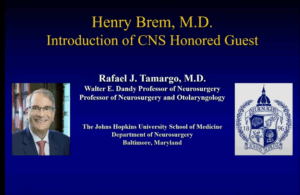
[00:00] It is a real pleasure to be here and to represent one of the greatest traditions of the Congress of Neurological Surgeons and that is the recognition of the CNS-honored guests. This individual is particularly close to me and to know that I will be standing here now is a real privilege.
[00:20] Now the theme of this meeting is neurosurgical origins and it's really important that you understand when you look at Dishonored Guest his origins and the trip that he's been through in his life and the impact he's had on others in that process.
[00:40] Steve's origins and background I have entitled from Motown to Hollywood. He's going to be the last honored guest most likely who lived in the generation before CT. We threatened our patients with direct stick arteriography or pneumoencephalography, and if we really had to, we did a neurology.
[01:00] examination on them. We were in a generation after the war. He was a baby boomer. He was born and raised in Detroit.
[01:20] We had heroes that came from that same generation. Arnold, O.J., Farrah. Those were the people that came up our same Ames group that represented the environment, the social environment that Steve was born and raised in.
[01:40] He was the oldest of six children of Lou and Betty Giannata, who worked in the construction industry in a blue-collar area of Detroit, Michigan. He was shaken.
[02:00] by three major forces in that environment. One was the automobile industry. He loved cars, he worked on cars, he worked in factories on cars, he was an automotive just savant. Motown
[02:20] Was a cool place to be. Detroit was the heart of Motown. He immediately got impressed and over the time endured a constant stress to be cool. And he became passionate about the color of blue.
[02:40] He went to college in Detroit at the University of Detroit. Medical school in residency at the University of Michigan. And while a medical student, he came into contact with Glenn Kent, a vascular neurosurgeon on faculty who really ignited his interest in cerebral vascular surgery.
[03:00] And over the course of time when he joined the residency and participated in the residency, there's a list of seven or eight papers, most of them first author, that he generated on vascular disease, the sound of a real future stardom of this guy. This guy, when he finished, was designated for great things.
[03:20] No question. He then decided to leave Detroit and go to Hollywood to move to California. He got his first job with UCLA in 1978. He then met Marty Wise and Marty Wise convinced him that he would be better across town.
[03:40] and the subsequent consequences of that are historic. 44 years at the same institution, now the professor and Marty Weiss professor of neurosurgery, a large number of trainees, a large training program, a phenomenal number of contributions as publications visiting Professor Shipp.
[04:00] hips, etc. A real superstar, academic superstar and teacher. It was there that he started his family and we're blessed to have two of his three wonderful children here, Brent, Nicole and Robyn Gianata.
[04:20] And I had the privilege of seeing these young people grow up into the fine people that they are today. I also had the privilege of being involved with him in a travel club in 1983. Several of us sat down and wrote a list of people that we wanted to grow.
[04:40] old and learn with. So we formulated the travel club later known as the Castan Society. It's subsequently generated I think 10 of the honored guests of this society, a dozen people that we spent every year together for almost 40 years of sharing our interests and ambitions and dreams.
[05:00] of neurosurgery. I participated with him in a great number of things that he did for neurosurgery, beginning in the Congress of Neurological Surgeons. This is a picture of him as vice president in 1992, 1993. He served as the annual meeting chairman, the secretary and
[05:20] vice president of this organization. He also served as president or board of directors, members of the others. More importantly, as he became more senior and more experienced, he was involved in some of the major turning points in this specialty in defending its integrity and
[05:40] protecting its future. He served as a secretary and chairman of the American Board of Neurological Surgeons, a member and then the chairman of the Residency Review Committee, and most recently as a secretary of caste during which we were placed in the position of defending our right.
[06:00] to do critical care for our own patients, to do endovascular neurosurgery as neurosurgeons, and to keep spine as a viable specialty within our program. These contributions are major in the effect that Steve has had on our specialty.
[06:20] He is the consummate surgeon, leader, mentor, role model, father, and friend. It is a great honor and not one that is free of emotion that I welcome him as our 2,000.
[06:40] 2024 honored guest Usually doesn't take it that easy on me actually
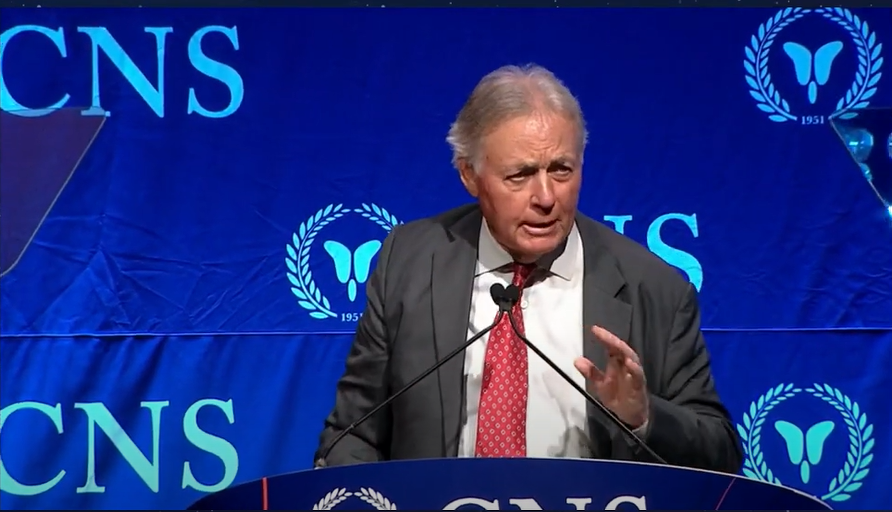
[07:00] Indeed, it's the honor of a career, especially to be honored by my favorite organization in neurological surgery and as Art outlined, it's been a fair amount of my professional life.
[07:20] doing whatever I could to support, promulgate the success of this organization. First order of business, I want to thank Alex Kalece and the executive committee for the designation and the honor bestowed on me.
[07:40] I also want to congratulate Alex for his leadership role in the Congress this year and many future leadership roles that we will witness that he will have a major impact on. In anticipation of next year, not that anybody will ask me next year.
[08:00] care. I want to congratulate the president-elect of the Congress of Neurological Surgeons, who's sitting right over there, Dr. Dan Ho, who at USC, we congratulate and express our pride.
[08:20] both of these gentlemen for their leadership of our organization.
[08:40] And it's a good thing that there's two of us this year because if you compare them to mine, I'm definitely number two. So it is an honor to have my name linked in some way with Henry's. So you want to be the chair, huh?
[09:00] My goals are to give a pep talk, certainly. We've got a room full of leaders here and I'll get more into that a little later. But it's also a cautionary tale. There's a price to be paid to pull this off and I'll try to illustrate a little bit of it.
[09:20] My experience is only in the academic sphere, so it's my hope, however, that those of us in the room, and I recognize probably two-thirds of us in the room, are in a practice association or in the employed model. Hopefully what I have to say about leadership works for.
[09:40] both of our disciplines. Why post the question in the first place? Well, in reverse order of time, we just had a major change in the leadership of our department at USC.
[10:00] Bill Mac is now the chairman succeeding me. And when that happens, there's ripple effects. A lot of people start thinking about their own potential for leadership roles and can they make a difference being somewhere else or doing something else? And do they have
[10:20] leadership capabilities that are perhaps untapped. And that generates a lot of opportunities for the existing chair and anybody else that's serving in a mentorship leadership role to advise our younger colleagues on what the advantage is
[10:40] or disadvantage of those kinds of leadership roles. And frankly, in neurosurgery, we have a lot of talent. We have a huge talent pool for leadership. If you think about the metrics that we use to select residents, one of them is their experience with leadership. And so in effect, most of the people in this room have expressed
[11:00] leadership capabilities starting probably from college if not even high school. However, numbers don't add up. If you think about the academic side, there's only 118 academic neurosurgical training
[11:20] grams, and there's a relatively low turnover rate, so these jobs don't come up very often. I was talking to Henry during the summer, and I think he said he's been the chair for 25 years. I've been the chair for 20 years. So that is an issue in terms of advising people to the extent.
[11:40] extent that people consider being a chair and honorific, all that does is make it even more competitive. But again, it comes with a price and there are positives and negatives to any kind of a choice like that. But it really, if you think about it
[12:00] It really isn't necessarily mandatory for success or even recognition. I'll give you some examples in my sphere and that is, art mentioned that I started off at UCLA. Well, when I was at UCLA, most of the people that I came in contact with thought Bob Ran.
[12:20] was the chair of neurosurgery at UCLA when in actuality it was Gene Stern. Similarly, I was a young vascular, or wannabe vascular neurosurgeon. One of my one of my heroes was Bob Ojimin at Mass General. I just assumed Bob Ojimin was the chair at Mass General.
[12:40] poor Nick Zervas in that regard. And then at USC with Marty, we all know of the fame, international fame of Dr. Appozzo, who is in our department and most of our international colleagues just assumed that Mike Appozzo was the chair of the department. So these people got all the recognition,
[13:00] They didn't have the obligations that the chair has. So that's kind of a word to the wise. And then a lot of us are aware of some of our icons in neurosurgery we most respect and revere. We're chairs at one point in time in their career and then gravitated towards.
[13:20] some other area of expertise and are certainly still iconic in our minds. I'm surrounded at USC by future leaders and so I like to give advice and so that's why we're talking.
[13:40] about this today. I have a muse for this. There's a lot of people in this room who have contributed mightily to our neurosurgical specialty. One person that couldn't be here today has an equal record to any of the most prodigious of us that have done that.
[14:00] sort of thing. And that's Ralph Dacy. And since Ralph can't travel, I made a pilgrimage to St. Louis and I spent the weekend with Ralph and Corinne and we talked at length about our experiences with being chairs of departments and a lot of and we
[14:20] He laughed a lot, frankly, which was one of the purposes of Mike Doan there.
[14:40] And I read this thing and I thought this is a beautiful paradigm for the ascendancy to leadership, especially in the academic sphere. And he, as only Ralph can do, wrote this beautiful single-authored treatise, categorized.
[15:00] He characterized that as clinical legacy.
[15:20] mode and in the research he characterized it as senior scientists and you can see along the the y-axis the progression of promotions and to me that just teed up everything I wanted to say and talk about when it comes to the third domain which is the leadership mode.
[15:40] So I started to put together a list of my own creation about positive reasons to seek a chairmanship or some leadership and perhaps compare those with some maybe less.
[16:00] desirous reasons to become chair. And while I was doing that, I gave up because I came across this. This is the double A and S sponsors interviews of our icons in neurosurgery and our leaders in neurosurgery, and they're posted on YouTube.
[16:20] And Brad Elder, another alumnus of our neurosurgery training program, interviewed Nino Kyoka on the event when he took over as chair of the Ohio State University program.
[16:40] quote, I was plateauing, wanted more for my personal development, more lab space, more lab funds, more OR time, more, more, more. Wouldn't it be great to be a chair? That way I can have total control of what I want to do.
[17:00] quickly learned upon arriving at Ohio State that it wasn't about me, it has to do with your team. Much more eloquently than my aphorism that I've doled out for the last 30 years when anybody asked me about being the chair and not necessarily just in neurosurgery, but
[17:20] I usually say, well, when you become a chair, it ain't all about you anymore. It's about everybody else. The ways to prepare. Well, there are literally 1,000 books on leadership. This is a sample from my library. You might notice
[17:40] sort of heavily weighted towards the military, one of my favorite topics and some of my favorite authors, more pointedly weighted towards fighter pilots, and even more pointedly towards lady fighter pilots. And in the center there you will see
[18:00] And a primer that I got from a friend of mine who's in the military, and this is the Army War College primer on leadership. There are also in my library some of the more contemporary and some of the more excellent books on leadership that are mostly
[18:20] based on business. Back to the primer, just so happens, coincidentally, I have a picture of General Petraeus on the cover who overlapped with my son, Brent, sitting in the audience right there when they were both at the Central Intelligence Agency.
[18:40] Books on leadership, what can they do? Well, my take is mostly they validate your instincts. If you're thinking about this and you want to have an idea, do I fit in these roles, the books are excellent for that. Will they inspire somebody who doesn't have an inclination to be
[19:00] a leader to undergo leadership roles or leadership training. I don't quite think so, but what they really do is they identify styles and qualities of excellent leaders, which also can be extremely
[19:20] helpful as you kind of measure yourself. And then that book that I didn't point out to you that was up in the upper left hand corner that's Dale Carnegie that book was written in the 1930s still the best leadership business book there is and because of the anecdotes and tactics in it for my money it's absolutely
[19:40] one of the most entertaining. But is there a playbook for neurosurgical department success? No, sorry, that's on you. Another reason there's probably a lot of books on leadership is coming up with a definition that is all-encompassing, and I was watching a
[20:00] entertainment TV show and they were interviewing Steven Spielberg and someone said, what's your definition of leadership? And Steven said, my definition of leadership is everybody running around doing what I tell them. And I thought, yeah, that works for me really well. But that definition not
[20:20] included in Ralph's treatise, but this is. Leadership is creating the conditions in a group whereby the outcome of the team's activities is optimized. And there's that word teams again that was brought up by Nino. Probably one of the best books. A lot of us in this room have read this, good to great.
[20:40] by Jim Collins and his team and you know what they did they they they found these foundering companies that were resurrected and then they they investigated actions and and the mannerisms of the CEO that was able to
[21:00] accomplish that turnaround and they catalogued the steps in that ascendancy to leadership in this pyramid and described coming from just a capable individual within the corporation all the way up through manager, effective leader.
[21:20] and then came up with a definition which is encompassed only by the nickname Level 5 Leadership. And Level 5 Leadership, I can almost read this, builds enduring greatness through a paradoxical
[21:40] paradoxical blend of personal humility and professional will, certainly paradoxical.
[22:00] What does the general think about books on leadership? This is one of my favorite generals, General Powell. Leadership is the art of accomplishing more than the science of management says is possible. So I'm not sure the general holds a lot of money.
[22:20] lot of these books in high, very high esteem. But after all, it's a business we're running and a lot of my advisees have asked me, Dr. G, do you think I should get an MBA if I'm going to try to get a job as a leader, you know, in the organization, whether it be academic or not?
[22:40] I started thinking about all the search committees that I'm on at CAC, and I thought about the leaders that we have for our major departments, and frankly, less than a third of our current chairs in our medical school have MBAs. So there may very well be great personal reasons
[23:00] for getting an MBA. And then there are other options to, without investing a couple of years, to learn some of these leadership skills. At Marshall School we have the MMM, which is Masters of Medical Management. But then a lot of the health systems are generating their own leadership courses, which is
[23:20] extremely helpful in terms of your leadership progression. Alright, well how do I get one of those jobs? Well it depends on what system you're in. If you're in a private practice or an employed system, you may ascend to the job, in which case you're going to probably be answerable, you're going to have to
[23:40] to impress one or two leaders. But if you're in the academic sphere, in a large academic institution, you're probably going to face a national search committee. And the search committee is going to be associated with a headhunter firm. These headhunter firms are extremely sub-specialized, and they actually get to know candidates almost on a personal basis.
[24:00] It's really remarkable working with these people. Remember, it's an audition. So when you go to the search committee for your interview, make sure you do your homework. Make sure you know the needs of whatever department it is that's your target. But also make sure you know.
[24:20] who is going to make the decision and who the leader is going to be, whether it's a dean or a CEO. And Ralph emphasized at this point, make sure that you know that you can get along with that person. When you're questioned, you will be questioned about things like a dynamic strategic vision that you have for the department.
[24:40] You will be asked about a strategy that encourages growth, of course. You will be asked to expand your scope in terms of education to include students, staff, faculty, and even the patients. DEI, this could be a tripwire.
[25:00] These committees do not want to hear a platitude about how you or we support the goals and objectives of diversity, equity and inclusion. What they want to hear, what is your track record and what are your results in those efforts?
[25:20] So be ready for that. Fiscal sustainability and the word alignment will come up a lot. In the academic sphere, they're talking not so much about aligning with neurology and orthopedics, etc., etc. They're talking about alignment with other departments within the medical school and other departments within the university.
[25:40] Alright, now that you have the job, get to work. Set the vision. You promised them you'd set the vision. If you're ascending to the role in your Native department, there may not be much change in culture that you need to affect. The rest of these roles, you've
[26:00] played to a greater or lesser extent, but now the scale and scope of them goes way up, and especially in advising. I asked Kathy, my secretary, when we got up, our faculty got up to 25. I said, why is there 100 people on the
[26:20] Christmas list. And that didn't even include the plus ones. So all manner of people will be in your office, getting coaching and advising from you. One of the most important roles of the chair of an
[26:40] department in an organization like an academic organization or even in the practice organization is advocating, advocating for your division, your department, etc. That fortress neurosurgery was a term that John Jayne taught Ralph D'Aeser.
[27:00] agency, and it refers to a balance between advocating for your department versus advocating for the enterprise. And when that balance shifts more towards your department, a la, when I was growing up, they used to say, as General Motors goes, so goes the nation.
[27:20] Similarly, in that regard, fortress neurosurgery becomes a pejorative. Tricks or tips for success, these two roles are so critical. The coordinator role, I can't emphasize enough.
[27:40] It's a lot of paperwork, so don't give it to the loneliest secretary in your department. Not everybody can have a Kathy Guzman I recognize, but it's a picture of her and Lois getting what amounts to the Distinguished Service Award from ARRNS, which is the organization
[28:00] organization that the coordinators are in and it's supported by the senior society. And so I can, I'll give you a tip. Whoever your coordinator is, make sure they have Kathy Guzman's phone number. Program director, another extremely important role.
[28:20] program director has to have, obviously, the respect of all the residents, but equally as important, the program director has to have the respect of all the faculty, because it's the program director that directs the faculty in terms of the learning environment. And I'm happy to say that at USC, in the history of USC, every program director has to have a respect for the residents.
[28:40] program director has been a full professor, including Gab Zata, our current program director. Ralph and I discussed this a lot before I left, and that is, we try to make a point that with all those administrative duties, it's really important for the chair to maintain his or her surge of pressure.
[29:00] It's a critical focus. It generates and sustains credibility and it sustains trust. Let's hear what the general has to say about trust.
[29:20] allow you to go and be an advocate for good. Trust. The longer I have been in public service and the more people have asked me about leadership over the years, leadership ultimately comes down to creating conditions of trust within an organization. Good leaders are people who are trusting.
[29:40] by followers. Alright that's the pep talk. Now the price. What keeps you up at night or a few nights I swore they didn't pay me enough for this job. This for those of you not in the academic
[30:00] sphere, that middle thing, non-reappointment, that's firing somebody. Okay? So, but is this an exhaustive list of the disagreeable roles that a chair of a department, you know, has to engage in? And the answer is absolutely no.
[30:20] In fact, what this list is is a paint-up, clean-up, fix-up list for me to make sure that apartment was in good shape when the new chair took over. Let's just take one of them, the failing resident. We know the stats. This is a survey done by...
[30:40] Greg Ziffel and his people at WashU and they surveyed 30 some programs. We all know the stats. At any given time, maybe 15 to 18% of residents might be in some trouble in terms of deficiencies. We know the deficiencies, we know the interventions, all the way down to possibly
[31:00] probation, but the outcomes are interesting and happily about half of the people that were in the subject of these surveys ultimately either graduated or stayed on track. So that's a positive outcome. The other half, another positive outcome, especially in my view, is
[31:20] is about 65% of the rest of them ended up transitioning to another specialty which probably more fit their skill set. And then the untoward outcome is below where they just went to another neurosurgery training program, probably setting that resident up for failure
[31:40] not doing the next department any good either. Because if we fumble this as program directors and department chairs, at the very least, a graduate medical education dean will be all over you. And at the very most, the attorneys will be in your office. Which leads to, if you're interested in the next class, you can go to our website, www.cst.com.
[32:00] For some of us, an inevitability. The inevitability is you perform well within your organization of chairs, and they start tapping you for other roles because of your expertise. If we go down the list, by my count today, we've got six deans of medical schools who are neurosurgeons.
[32:20] could be wrong, that could change on a day-to-day basis. There are people in this room who are CEOs of health systems and so forth. And so there are a lot of opportunity for enterprise leadership, especially including our own organizations. And I would love to be able to talk more about the War College in their view.
[32:40] viewpoint on this, but I promised, Koi, I'd only be up here 25 minutes. That's the end of my remarks and it's also the end of the leadership component of my career so I have a lot of people to thank so buckle up. Beautiful woman in the world, double bronze star winner.
[33:00] beautiful children and son in law who's one of the greatest girl dads ever. The beautiful Sharon Giannata who gave a lot of her years to the CNS auxiliary and raised our beautiful family. My mentors, Glenn Kent, was mentioned, Marty Weiss,
[33:20] really shepherded me through my academic career, Don Quest, shepherded me through my leadership career. Our faculty, so proud of all of you. I usually get to take the credit for all of your accomplishments. My residents, who I absolutely love to death, you are the
[33:40] crown jewel of our department and all my people who didn't take my advice and became chairs of departments anyway and I want to tell all of you people, gentlemen, that I am so very proud of you. My network, you've heard about it. There are a few
[34:00] Few leaders in this group mentioned them. There's Nick Hopkins and Art and Ralph Dacy, Roberto Harris, Duke Sampson and yes the hairsuit guy in the back row. Yes that is Spetzler. This is risky. I threw up a few slides of some pals of mine in neurosurgery.
[34:20] surgery, and I'm sure two or three will come up to me afterwards and say, where was my picture? But most of these people are neurosurgical golfers. The astute observers will notice in the lower right-hand corner that not everybody is a neurosurgeon. These people are partners in industry who make sure we have the instrumentation apply our trade and provided me
[34:40] with career-long friendships. And finally, my life partner, Debbie Millman, serial entrepreneur, multi-time CEO, also role model for me who taught me, among other things, the advantage of risk-taking as a leader.
[35:00] I leave you with this. Anybody with inkling to be a rise to leadership roles after what I said, Victor Frankl said, happiness ensues as the unintended side effect of pursuing a goal larger than one's self. Thank you very much.
[35:20] You