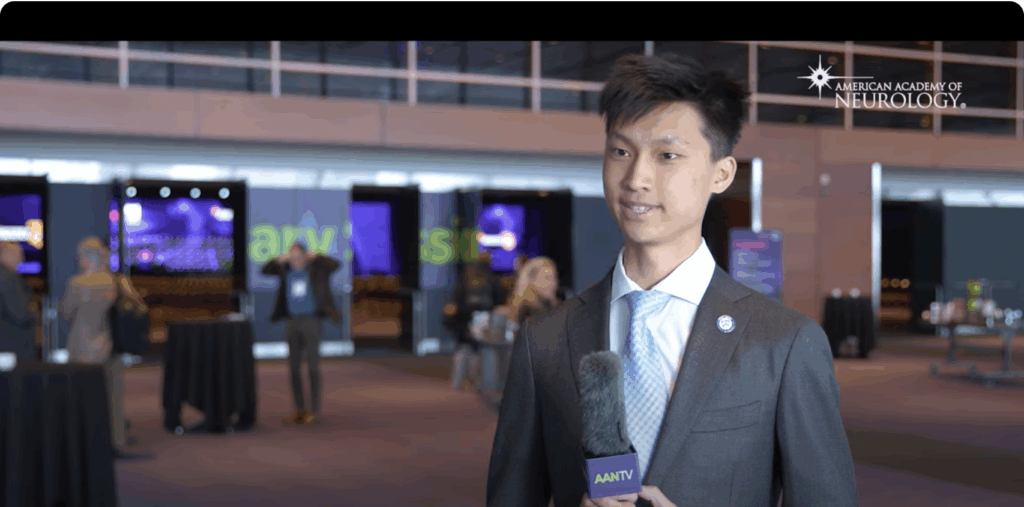
Episode 3: AANTV at the 2023 Annual Meeting – American Academy of Neurology
- October 3, 2025
- 2:05 pm
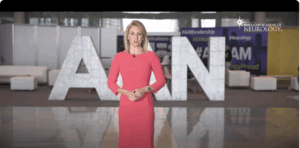
Since 1948, the American Academy of Neurology has been committed to creating novel ways to educate and assist members in providing high-value, team-based patient-centered clinical care. As we highlight the many accomplishments and advances of the last 75 years, AANTV is bringing it all straight to you.
Today we are shifting the focus to emerging science. The AAN has made it its mission to expand and support neuroscience research and today we will do just that as we catch up with three trailblazers—this year’s recipients of the highly prestigious AAN Neuroscience Research Prize Award. Hear how three high schoolers are changing the game of neuroscience.
Plus, we sit down with the Science Committee Chair, Dr. Natalia Rost to find out which key pieces of emerging science are being highlighted at this year's scientific sessions. And we talk one-on-one with Dr. Ralph Jozefowicz about how neurology education has gone global.
We also will tour the Center without Walls at the University of Pennsylvania and The Parkinson’s Disease and Movement Disorders Center of Boca Raton about how both institutions are breaking new ground in the fight against Parkinson’s.
And lastly, we get to meet "Miss Sarah Bellum!" A new addition to this year's AAN team, Sarah Bellum checks in with attendees to find out what they are most looking forward to at this year's annual meeting.
Summary
AAN TV — Emerging Science, Student Trailblazers, and Global Partnerships in Neurology
AAN TV’s 75th-anniversary broadcast from Boston turns the spotlight to emerging science—how new ideas get selected, tested, and translated to the clinic. From first-in-human neural cell implants for epilepsy to next-generation PET tracers and focused ultrasound, this episode also honors high-school scientists already pushing the field forward, and profiles global collaborations and comprehensive centers advancing Parkinson’s and other neurodegenerative diseases.
Table of Contents
- How to Watch AAN TV
- Why “Emerging Science” — and How It’s Chosen
- What to Expect This Week: The Scale of New Data
- Spotlight Study: First-in-Human GABAergic Implants for Focal Epilepsy
- Plenary Highlights: Handpicked Breakthroughs
- Meet the AAN Neuroscience Research Prize Winners
- Imaging the Unseeable: The “Center Without Walls” for PET
- Neurology Without Borders: Kraków–Rochester Partnership
- Comprehensive Care Models for Parkinson’s & Dementia
- Voices from the Floor
- Conclusion
- Key Takeaways
How to Watch AAN TV
Catch current episodes:
- Convention center TV stations
- AAN website
- In-house channels at partner hotels
- AAN YouTube and Twitter channels
Why “Emerging Science” — and How It’s Chosen
Host: Atria Godfrey
Guest: Chair of the AAN Science Committee
The AAN has invested heavily for decades to grow its scientific program. Selection is continuous: planning starts as soon as the prior meeting ends. The Science Committee—spanning basic, translational, and clinical subspecialties—scans the landscape for clinically relevant, cutting-edge work, curating what most advances patient care.
What to Expect This Week: The Scale of New Data
- >2,600 original scientific abstracts
- >400 oral presentations
- ~2,000 poster presentations clustered in “poster neighborhoods”
- Multiple science and clinic symposia, plus plenary sessions featuring the highest-impact work.
Spotlight Study: First-in-Human GABAergic Implants for Focal Epilepsy
Topic: Mesial temporal lobe epilepsy—often refractory to medications and incompletely helped by prior surgeries.
Approach: Stereotactic implantation of GABAergic interneurons designed to increase inhibitory tone and calm hyperexcitable circuits.
Why it matters: A first-in-human showcase within the Emerging Science track that points toward a cellular neuromodulation strategy for drug-resistant epilepsy.
Plenary Highlights: Handpicked Breakthroughs
Plenaries aggregate top findings across subspecialties, intentionally scheduled front-and-center so the entire neurology community can see the most practice-shaping results together.
Meet the AAN Neuroscience Research Prize Winners
Three outstanding high-school scientists demonstrate how early curiosity translates to impact:
- Max Young (NY) — Metabolic–viral convergence in brain fog
- Explores interactions among mucopyrins, amorphins, and acidic lipids to explain COVID-19 “brain fog” and the observed link between diabetes and Alzheimer’s risk.
- Faruq (TX) — AI for Parkinson’s
- App + web platform applying machine learning to diagnose, analyze, and guide treatment in Parkinson’s; reported accuracy gains over current workflows and global accessibility.
- Samantha Shavitt (NY) — Focused ultrasound to open the BBB
- Uses focused ultrasound in a mouse model of high-grade glioma to open the blood–brain barrier and increase drug delivery, a key hurdle in neuro-oncology.
Their message: AI, engineered delivery, and mechanistic links between systemic disease and cognition will shape neurology’s future.
Imaging the Unseeable: The “Center Without Walls” for PET
Institutions: University of Pennsylvania (lead), Yale PET Center, and partners
Mission: Develop novel PET radiotracers and computational pipelines to visualize hard-to-image targets in Alzheimer’s disease, Parkinson’s, and related disorders.
What’s new:
- Coordinated medicinal chemistry + imaging physics + computational methods for faster, smarter tracer development
- A platform intended as a paradigm shift in how radiopharmaceuticals move from concept to clinic.
Neurology Without Borders: Kraków–Rochester Partnership
Guest: Dr. Ralph Józefowicz
A 25-year, revenue-neutral, bi-directional exchange between Jagiellonian University (Kraków) and the University of Rochester—launched from a Fulbright and a sister-city link—now includes student and faculty exchanges and joint education conferences.
Why it works: Passionate advocates in both countries, mutual benefit, and shared support.
Big picture: “The world is small”—U.S. medical education’s future is global, and we learn as much as we teach.
Comprehensive Care Models for Parkinson’s & Dementia
Institutes profiled: Parkinson’s Disease & Movement Center (founded 1999) and the Institute for Neurodegenerative Diseases of Florida
Model: A non-university academic medical center integrating:
- Movement disorder specialist care
- Clinical trials access with informed patient choice
- Wellness and education centers
Goal: Prevent and treat Alzheimer’s, Parkinson’s, and Lewy body dementia with approaches “previously thought impossible,” backed by foundations supporting research, outreach, and education.
Learn more: ParkinsonCenter.org and IND Florida.
Voices from the Floor
Attendees most look forward to:
- Networking at scale (post-COVID reconnection)
- Women Leading in Neurology leadership community
- Presenting new research and meeting “the brightest minds”
- “The neurology conference of the year”—for both content and community
Conclusion
AAN’s 75th year underscores a simple truth: emerging science thrives when discovery, education, and clinical relevance move together. From cell therapies to PET tracer ecosystems, from student innovators to global exchanges, the Academy is curating what matters most—science that patients will feel.
Key Takeaways
- Curated breakthroughs: AAN’s Science Committee selects clinically relevant advances across basic → translational → clinical research.
- Scale & impact: 2,600+ abstracts, with plenary spotlights to focus attention on practice-shaping results.
- Novel therapeutics: GABAergic interneuron implants signal a new cellular approach for drug-resistant epilepsy.
- Young innovators: High-school awardees showcase AI for Parkinson’s, focused ultrasound BBB opening, and COVID–metabolism–cognition links.
- Next-gen imaging: The PET Center Without Walls aims to compress the cycle from target to tracer to translation.
- Global education: Long-standing Kraków–Rochester exchange proves mutual, sustainable international training works.
- Comprehensive care: Integrated specialist care, trials, and wellness programs are redefining Parkinson’s and dementia management.
- Stay connected: Watch AAN TV across venue screens, web, hotels, YouTube, and Twitter to keep pace with the week’s discoveries.
Raw Transcript
[00:00] Thanks for watching.
[00:20] team-based patient-centered clinical care. As we highlight the many accomplishments and advances of the last 75 years, AAN-TV is bringing it all straight to you. Hello and welcome back to the 75th anniversary.
[00:40] of the AAN. I'm Atria Godfrey and this is AAN TV. Today we are shifting the focus to emerging science. The AAN has made it its mission to expand and support neuroscience research and today we will do just that as we catch up with three trailblazers. This year's recipients of the highly prestigious AAN
[01:00] Neuroscience Research Prize Award. Hear how these high schoolers are changing the game of neuroscience. Plus we continue our tour of the organizations and institutions, blazing new trails in neurologic research and specifically the ways in which we treat Parkinson's. There is so much to see and we want to make sure you never miss a minute.
[01:20] You can always find the latest AAN TV episode airing on the TV station throughout the convention center. On the AAN website, on the in-house channels at some of our partner hotels,
[01:40] And on the AAN YouTube and Twitter channels.
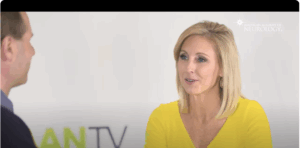
[02:00] latest emerging science. She also serves as the science committee chair for AAN and is here with us in studio now with a look ahead at what we can expect this week. Thanks for your time. Thank you for having me. Let's get started with given that there is always emerging science, it's ongoing, how do you decide and how do you select what should be showcased here at this annual meeting?
[02:20] Well I'm so glad you asked me this question because this is my opportunity to thank the AAN Science Committee, which is a planning body of this meeting and not only of the meeting and scientific program of the meeting, but also of all think science at the American Academy of Neurology. As you know, the AAN has invested over the years an enormous amount of resources.
[02:40] into building up our neurological research and science program and that ultimately is translating into the richness of the program. So the planning of this year's meeting begins almost immediately after the meeting ends the year prior and so that's when we begin environmental scan of what's new, what's the cutting-edge.
[03:00] in every area of neurology. And the science committee is representing really multiple subspecialties, but also multiple types of research, such as basic, translational and clinical research. So the choices are very broad, but we are very focused on what is relevant to our clinical mission. So that's how you kind of whittle it down.
[03:20] Now, can you tell us what we have in store this week?
[03:40] science and a clinic symposia. More than 2,600 original scientific abstracts are going to be presented at this meeting. More than 400 of them are going to be in the oral presentation format and over 2,000 in post-turn neighborhoods. So I'm inviting everybody to come and join the party. A lot to take in. I know that there's also a new study this year.
[04:00] specifically focusing on focal epilepsy. What can you tell us about this research? You are talking about the study that has been submitted in the subtext of the Emerging Science Program. And this Emerging Science is really something that the academy wants to bring the latest and greatest kind of heart of the press scientific breakthroughs. And so this is a study that's been conducted
[04:20] This particular study is focused on what's called mesotemporal lobe epilepsy. This is one of the disorders that are very difficult to control with traditional medications. Some surgical approaches were attempted in the past for this type of patient populations, but again, patients are still suffering with breakthrough seizures.
[04:40] So in this particular trial, they've tried to implant into the brain through a surgical, limited surgical procedure, a type of neurons that produce a substance that helps calm brain down or we call it GABAergic interneuron implant and so the two patients that they're presenting
[05:00] presenting to us are kind of a showcase. It's first in human and really representing the latest and greatest. So in addition to that one, are there any other key studies that you would like to highlight? Well, like I said, there's 2,600 original. Do you have one out of those? Well, I wanted to actually draw attention to the abstracts and other studies that are going to be available.
[05:20] to be presented in a context of the plenary sessions. Those are going to be the top kind of key findings in different subspecialties and areas of research. We specifically select them in such a way that you really want to be front and center and so everybody has an opportunity to see them. As you know, our plenary sessions are our
[05:40] kind of a premier science and so it's also a place for a neurological community during the meeting to come together so I invite everybody to attend. Fascinating, well we certainly appreciate all the work that you and the science committee have put in for this week and we're looking forward to a great week ahead. Thank you so much, so are we.
[06:00] When it comes to emerging science, one of the most prestigious awards the AAN bestows recognizes high schoolers who have shown incredible scientific skill and talent in their contributions to neuroscience. It's time to meet this year's AAN Neuroscience Research Prize Award winners.
[06:20] My name is Max Young and I'm a senior from Rossin High School in Long Island, New York. I'm focused for a true II am from Heritage High School in Frisco, Texas. I'm Samantha Shavitt. I go to Byron Hills High School in Armand, New York. So my research focused on the interaction of the mucopyrin and amorphins and cediclipid. So essentially I saw that COVID-19 is a lot of brain-
[06:40] fog issues, and that people with diabetes also have a high incidence of getting Alzheimer's. My research found a link between diabetes patients and patients with COVID-19 and how it affects their memory. My research was using machine learning to diagnose, analyze, and treat Parkinson's patients all from their app and their websites, and we found that it can actually
[07:00] actually increase their accuracy as compared to the current medical industry and also improve accessibility to billions of people across the world. I investigated the use of focused ultrasound to open the blood-brain barrier and increase drug delivery in a murine model of primary high grade glioma tumors.
[07:20] I was not a doctor, I was a doctor. I was not a doctor, I was a doctor. I was not a doctor, I was a doctor. I was not a doctor, I was a doctor. I was not a doctor, I was a doctor. I was not a doctor, I was a doctor. I was not a doctor, I was a doctor. I was not a doctor, I was a doctor.
[07:40] smart people and it was such a great experience. It really validated my research. I went into my science research program hoping to help just one person and being here in front of all of the really prestigious doctors and researchers gives me hope for my future. The future of neurology is definitely an AI mission.
[08:00] The future of neurology is bright. The future of neurology is ever-changing and hopefully I can contribute something to a cure for these brain cancers. Turning now to groundbreaking new research being conducted at the University of Michigan.
[08:20] of Pennsylvania's center without walls that could dramatically change the way that we treat and diagnose conditions like Parkinson's disease and others. The center without walls for imaging protonapathy with PET is a multidisciplinary, multinstidicular
[08:40] institutional research program whose goal is to develop novel radio traces for use with the molecular imaging technique positron emission tomography. Yale and the Yale Pet Center is just very excited to be part of this fabulous consortium to be able to develop novel radio pharmaceuticals for these Alzheimer's disease and related
[09:00] disorders, trying to look at these targets in the brain that are just very, very difficult to image without the right combination of the right radiopharmaceuticals as well as the right imaging technologies there. I think the computational methods that we developed as part of this center is going to be a paradigm shift in pet radio tracer development.
[09:20] women. The incredible work beyond American borders
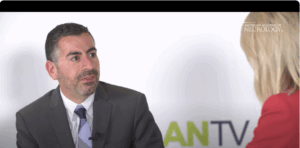
[09:40] with us knows that firsthand. Dr. Ralph Josephowitz joins us now in studio to discuss neurology on a global scale. Such a pleasure to have you this morning. It's a real pleasure to be here. Well, you are speaking at the Presidential Plenary this year. What are your key topics that you would like folks to take away? Well, I was speaking about this program in medical education that
[10:00] I established between Yaglonian University in Krakow and the University of Rochester about 25 years ago. And I think the key thing is the reason the program is so successful, and it includes student and faculty exchanges and education conferences, is because there are passionate advocates in both countries. Number two
[10:20] It provides benefit to both countries. And number three, it's revenue neutral because each country basically supports it. How did this partnership come about? Well, it started with my Fulbright in 1992. I spent five months in Krakow, Poland on a Fulbright sabbatical, teaching neurology and English at
[10:40] at the Yaglone University School of Medicine. And the way that started is Krakow and Rochester, New York are sister cities. And because of the sister city connection, this all became established. And you've placed a lot of importance on education throughout your incredible career. Why is this such an important topic for you? Why do you think it's so important for us to-
[11:00] continue our education.
[11:20] not only teach students and each other, they teach our patients. How would you describe the globalization of neurologic education? The world is small and the future of American medical education is international medical education but also we learn so much when we interact with our colleagues abroad.
[11:40] broad. So that's the globalization. It's not only do we give, but we also receive. And so you travel to Krakow every year? Every year for 26 years. Incredible. You've certainly racked up some points. What do you hear from your colleagues there and from your students there about the world of neurology? What I've really been impressed with, especially when I was there last year, is that we're going to be able to get to the point where we're going to be able to get to the point where we're going to be able to get to the point where we're going to be able to get to the point where we're going to be able to get to the point where we're going to be able to get to the point where we're going to be able to get to the point where we're going to be able to get to the point where we're going to be able to get to the point where we're going to be able to get to the point where we're going to be able to get to the point where we're going to be able to get to the point where we're going to be able to get to the point where we're going to be able to get to the point where we're going to be able to get to the point where we're going to be able to get to the point where we're going to be able to get to the point where we're going to be able to get to the point where we're going to be able to get to the point where we're going to be able to get to the point where we're going to be able to get to the point where we're going to be able to get to the point where we're going to be able to get to the point where we're going to be able to get to the point where we're going to be able to get to the point where we're going to be able to get to the point where we're going to be able to get to the point where we're going to get to the point where we're going to get
[12:00] year and my second full bright is the level of medical care and scientific knowledge in especially in neurology is the same as in the United States right now. So the world really is small getting smaller by the day. Yes. Alright well we certainly appreciate all of your work within the neurology community and we appreciate your time this morning. Thank you. Thank you very
[12:20] much.
[12:40] We founded the Parkinson's disease and Minnesota Center in 1999. The Institute for Neurodegenerative Diseases of Florida includes a clinical care center, a research center, a wellness center and the foundation. We're a non-university based academic medical center and our goal is to advance research and
[13:00] Alzheimer's, Parkinson's disease, as well as Lewy body dementia. At our center, we're able to combine expert medical care by movement disorder specialists with access to research programs that patients can find out about and decide whether they want to be a part of. It's our goal to prevent and treat these neurodegenerative diseases in ways that
[13:20] in the past we never thought were possible. The Parkinson's Research and Education Foundation and the Alzheimer's and Parkinson's Research and Education Foundation is committed to supporting research initiatives, community outreach, and education for Alzheimer's disease, Parkinson's disease, Lewy body dementia, and other neurodegenerative diseases related to aging.
[13:40] If you'd like to learn more, visit ParkinsonCenter.org or visit IND, Florida.
[14:00] vellum. Alright, Sarah, w attendees are most lookin year. I'm feeling excitre the brightest minds in ne opportunity to meet some
[14:20] presenting my research on Wednesday morning. So I'm looking forward to that.
[14:40] the networking, the content, the people. I mean this is just the neurology conference of the year. I am with the AAN Women Leading in Neurology Leadership Group and I have been so fortunate to be part of this illustrious program and meeting such wonderful, inspiring and brilliant people.
[15:00] people. I'm most looking forward to connecting with peers and friends at post COVID, having that opportunity to network. So that's been awesome. We're only halfway through this exciting week in Boston and there is still
[15:20] much more ahead this week, including the future of neurology and health and wellness efforts. If you missed any of today's episodes, remember you can always catch us by finding AAN TV on the TV stationed throughout the convention center on the AAN website.
[15:40] in-house channels at some of our partner hotels and on the AAN YouTube and Twitter channels. Thanks for tuning in to AAN TV today.
[16:00] can't wait to see you right back here tomorrow. Go have a great day.